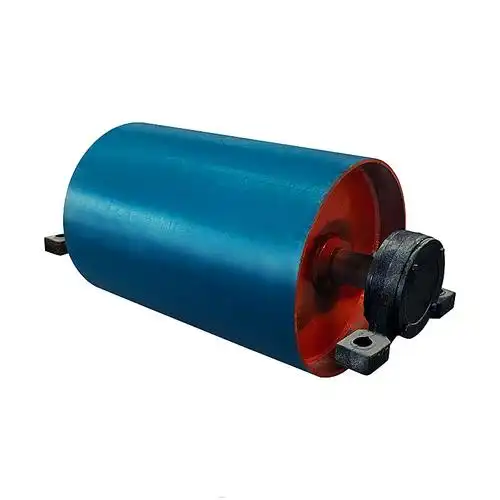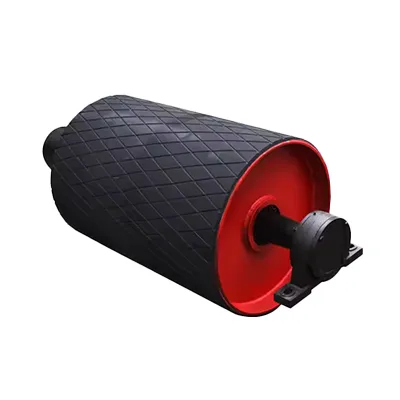
DRIVE PULLEY
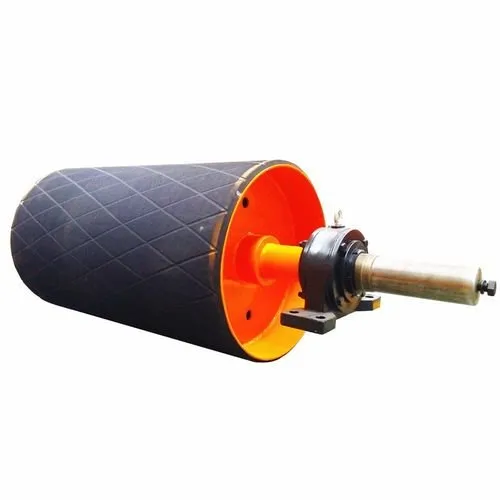
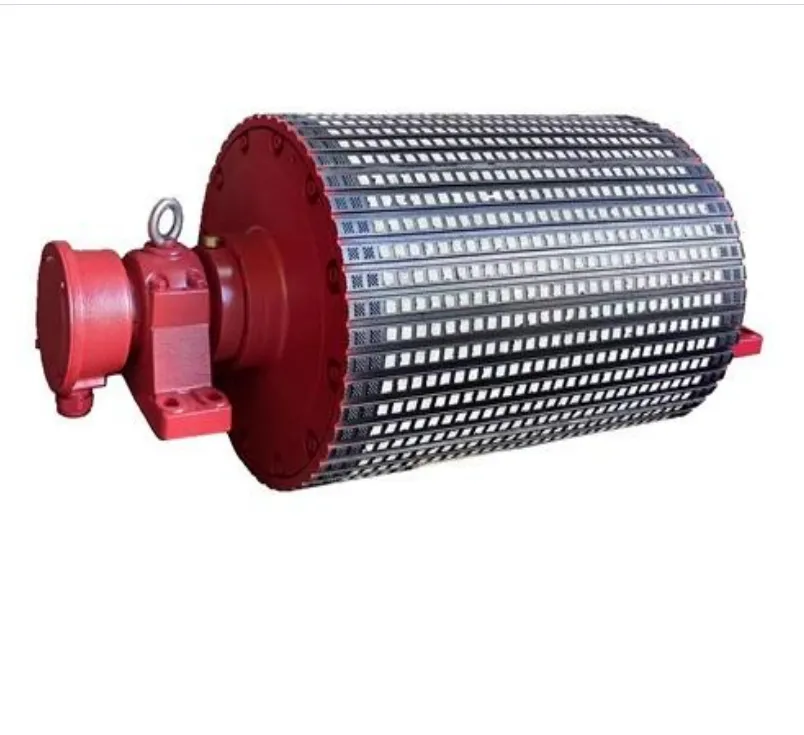
CONVEYOR DRIVE PULLEY (HEAD PULLEY)
The drive pulley transmits power to the conveyor belt. For a replacement or new project, send the pulley position, belt width, diameter, face width and shaft/mounting drawing. BisonConvey coordinates supplier review of the specified configuration before quotation.
Plain or grooved rubber lagging, ceramic lagging, material, balancing and inspection requirements can be included in your request. Available options and supporting documents are confirmed for the individual pulley; no universal shaft, duty or service-life range is assumed.
- Drawing-based inquiries
- Options confirmed per quotation
- Document requests welcome
SPECIFICATION INPUTS TO CONFIRM
PRODUCT-SPECIFIC REVIEW
- Drawing-based configuration review
- Lagging and material requirements checked for the specified pulley
- Shaft, bearing and mounting interfaces reviewed before ordering
- Balancing and inspection scope agreed for the individual order
DUTY CONTEXTS TO DISCUSS
What to send for a drive pulley quotation
Send what you know; a drawing, marked photo, BOM or sample-based request can help identify missing information. Options, compatibility and document availability require supplier confirmation for the specified item before ordering.
- Geometry & position
- Pulley position, belt width, diameter over lagging, bare-shell diameter and face width; mark which dimensions are known.
- Shaft & installation interfaces
- Shaft drawing, journals, keyway or connection, bearings/housings and mounting dimensions. Include the existing part reference if replacing a pulley.
- Drive duty
- Speed, power or torque, belt tensions and start/stop duty if available. Unknown values can be discussed; a photo does not establish a shaft rating.
- Lagging, material & finish
- Request plain/grooved rubber or ceramic lagging, material grade and protection as needed. Thickness, pattern, feasibility and inspection scope require supplier confirmation.
- Quantity & approval documents
- Quantity, drawing revision, any sample or balancing/inspection requirements, destination and packing restrictions.
Sampling, inspection, packing, timing and support are agreed per order. No standard sample deadline or service-life guarantee is implied.
Pulley lagging product view
The view shows ceramic-lagged conveyor pulleys. For a drive-pulley inquiry, confirm the installation position and complete assembly drawing; ceramic lagging is a configuration to review, not an automatic suitability or grip guarantee.
Supplier-provided product images, shared with website-use authorization. They are not evidence of a BisonConvey-owned factory, a completed customer project or tested performance. Configuration and supply scope require order-specific confirmation.
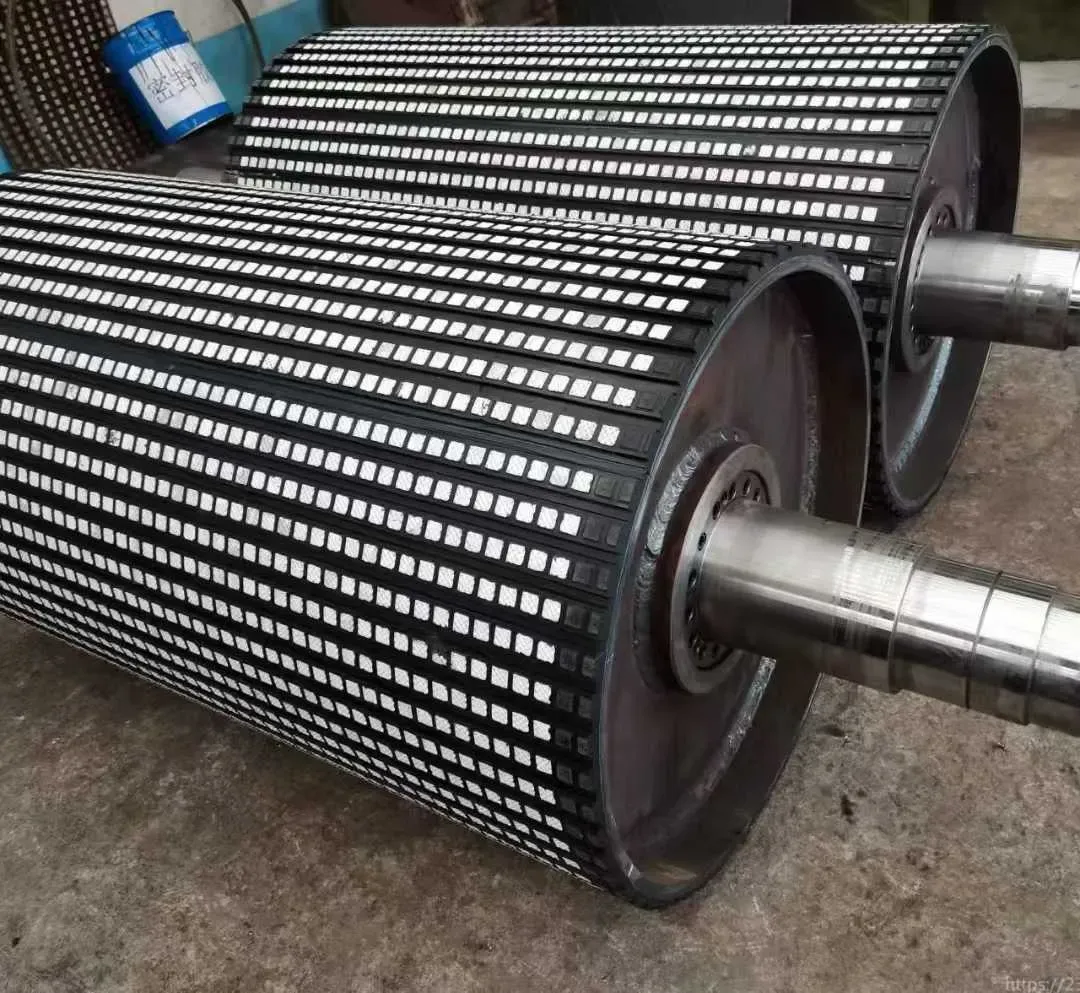
Ceramic lagging and assembly interfaces
Specify shell and finished outside diameters, face width, shaft interfaces and lagging requirements separately. The product shown is a pulley, not a ceramic-lagged idler.
How to Read a Drive Pulley Specification
The drive pulley — also called the head pulley, because it usually sits at the discharge head — is the one pulley on the conveyor that transmits power into the belt. Every other pulley only redirects or tensions. That single difference governs how it is specified. A typical spec reads Ø 800 · B 1000 · Q345 shell · grooved rubber lagging · G6.3 balancing. The example is for reading a specification, not a confirmed product model or available size range. The quoted construction, current test criteria and supporting documents require supplier confirmation.
- Ø 800
- Pulley diameterSet by the belt carcass, which determines how tightly the belt can bend repeatedly without fatigue. On the drive pulley the diameter also matters for torque: for a given belt tension difference, a larger diameter means more torque for the same tangential force.
- B 1000
- Face widthMatched to belt width, and made wider than the belt so normal mistracking does not run the belt off the edge. On a lagged drive pulley confirm whether a quoted face width is over the lagging or the bare shell.
- Q345
- Shell materialCarbon steel Q235 or Q345. The shell carries the belt load and transmits torque from the hub out to the belt surface, which is why weld quality and hub design matter more here than on a non-drive pulley.
- Grooved rubber
- Lagging typePlain rubber, grooved rubber or ceramic. This is not optional on a drive: bare steel against a wet belt has very little grip. Grooved patterns drain the interface in wet duty; ceramic escalates grip and life where rubber wears out too fast.
- G6.3
- Dynamic balancing gradeA balance quality grade to ISO 1940, commonly G6.3 for conveyor pulleys. It becomes more important as belt speed rises — at low speed balancing is optional, at high speed an unbalanced drive pulley induces vibration that shortens bearing life.
The drive pulley shaft is the one shaft on the conveyor loaded in combined bending and torsion. Bend, tail and take-up pulley shafts see bending from belt tension alone; the drive shaft also carries the full drive torque. Size it accordingly rather than reusing a non-drive shaft calculation.
Drive Pulley Selection Guide
Specifying a drive pulley is really two problems: can it transmit the torque without the belt slipping, and can the belt survive bending around it. Solve them in that order.
Establish the power and the belt tensions
Start from the motor power the conveyor needs and the resulting tight-side and slack-side tensions at the drive. The difference between them is the effective tension the drive must transmit through friction. Everything downstream — lagging, wrap angle, shaft sizing — follows from these numbers.
Calculate required motor powerCheck the drive can transmit that tension without slipping
The torque a drive pulley can transmit before the belt slips rises with the friction coefficient at the belt-pulley interface and with the wrap angle. If the numbers are marginal you have three levers: better lagging, more wrap angle via a snub pulley, or a dual-drive arrangement. Lagging is usually the cheapest of the three to specify up front.
Calculate belt tensionSet the diameter from the belt carcass
Minimum pulley diameter is governed by the belt's carcass — rating, ply count or cord construction — because that fixes how tightly the belt can bend repeatedly without fatiguing. The drive pulley is where the belt is under highest tension while bending, so this is the least forgiving place to undersize.
Check minimum pulley diameterChoose the lagging for the environment
Plain rubber suits clean dry duty. Grooved rubber — herringbone or diamond — drains water and fines out of the interface and is the right default for wet, muddy or washdown conditions. Ceramic is an escalation for very high tension with wet abrasive material, where rubber wears out fast enough that re-lagging intervals stop being economic.
Confirm shaft, hub, and balancing for the duty
Size the shaft for combined bending and torsion, not bending alone. Choose between a welded and a cast hub for the load and the shaft connection method. Specify a balance quality grade appropriate to belt speed — this is where a cheap drive pulley quietly costs you bearings.
Common Specification Mistakes
Four errors that recur on drive pulley enquiries. All four come from treating the drive as just another pulley.
Not saying which pulley is the driven one
Drive, head, bend, snub, tail and take-up pulleys are routinely quoted from a diameter and a width alone. Only the driven pulley needs traction, torque-rated shaft sizing and a slip check. State clearly in the enquiry which pulley transmits power — if the layout uses a tail or intermediate drive, say so, because the head pulley then is not the drive pulley.
Sizing the shaft for bending only
The drive shaft is loaded in combined bending and torsion, unlike every other pulley shaft on the conveyor. A shaft sized on belt tension alone is undersized for a drive. This is a quiet failure mode: the shaft does not break immediately, it fatigues, and the symptom appears as bearing trouble or run-out long before anyone suspects the shaft.
Leaving the drive pulley unlagged
Bare steel against a wet or dirty belt has very little grip, and the drive is the one pulley where grip determines whether the conveyor works at all. Slip shows up as squeal, belt speed loss under load, and scorching of the belt bottom cover. Lagging is cheap compared with the belt damage that repeated slip causes.
Treating balancing as an upsell
Balance quality is genuinely optional on a slow conveyor and genuinely necessary on a fast one, because permissible residual unbalance scales with speed. Declining a balance grade to save cost on a high-speed drive buys vibration that works through bearings, housings and fasteners. Specify the grade from belt speed rather than from budget.
FREQUENTLY ASKED QUESTIONS
Are the listed options confirmed for every configuration?
No. Submit the dimensions, interfaces, duty and document requirements for your item. The supplier confirms the available configuration and any deviations in the quotation. Examples in the specification guide explain terminology; they are not a verified supply range or test certificate.
Is a drive pulley the same as a head pulley?
In most conveyor layouts, yes. The drive pulley is the one that transmits power into the belt, and it is usually located at the discharge end — the head — so the two names refer to the same component. They can differ: on a conveyor driven from the tail or by an intermediate drive, the driving pulley is not at the head. If your layout is unusual, say which pulley is driven rather than relying on the name.
How does a drive pulley differ from the other pulleys?
It is the only one transmitting torque. Bend, snub, tail and take-up pulleys redirect the belt or maintain tension but transmit no power. That means the drive pulley uniquely needs lagging for traction, uniquely has a shaft loaded in combined bending and torsion, and is uniquely sensitive to belt slip. Everything else on the conveyor is a routing or tensioning component.
How do I stop the belt slipping on the drive pulley?
Slip means the drive is trying to transmit more tension difference than the friction at the interface allows. There are three practical levers: increase the friction coefficient with better lagging, increase the wrap angle by fitting a snub pulley, or split the load across a dual-drive arrangement. Increasing belt tension also helps but costs belt and bearing life, so it is the last resort rather than the first.
Which lagging should a drive pulley have?
Almost always something — bare steel against a wet belt grips very poorly. Plain rubber is fine for clean dry indoor duty. Grooved rubber is the right default outdoors or anywhere wet, because the grooves expel water and fines from between belt and pulley. Ceramic is for high-tension wet abrasive duty where rubber does not last long enough to be economic.
What does a G6.3 balancing grade mean?
It is a balance quality grade defined in ISO 1940, commonly applied to conveyor pulleys. In practice it specifies how much residual unbalance is permitted relative to rotational speed. The faster the pulley turns, the more that residual unbalance matters — which is why balancing is genuinely optional on slow belts and genuinely important on fast ones.
Why does the drive pulley shaft need a different calculation?
Because it carries torque as well as bending. A bend or tail pulley shaft sees bending from belt tension only. The drive shaft sees that same bending plus the full drive torque, and the combination governs the required diameter and the fatigue check. Reusing a non-drive shaft sizing on a drive pulley underestimates the load.
Free tools for sizing this product
Run the numbers before you send an RFQ — no signup, no email.
Download the CONVEYOR DRIVE PULLEY (HEAD PULLEY) inquiry guide
Specification inputs and procurement questions for supplier review. This website guide is not a supplier-approved datasheet, certificate or performance guarantee.
PDF · A4 · English