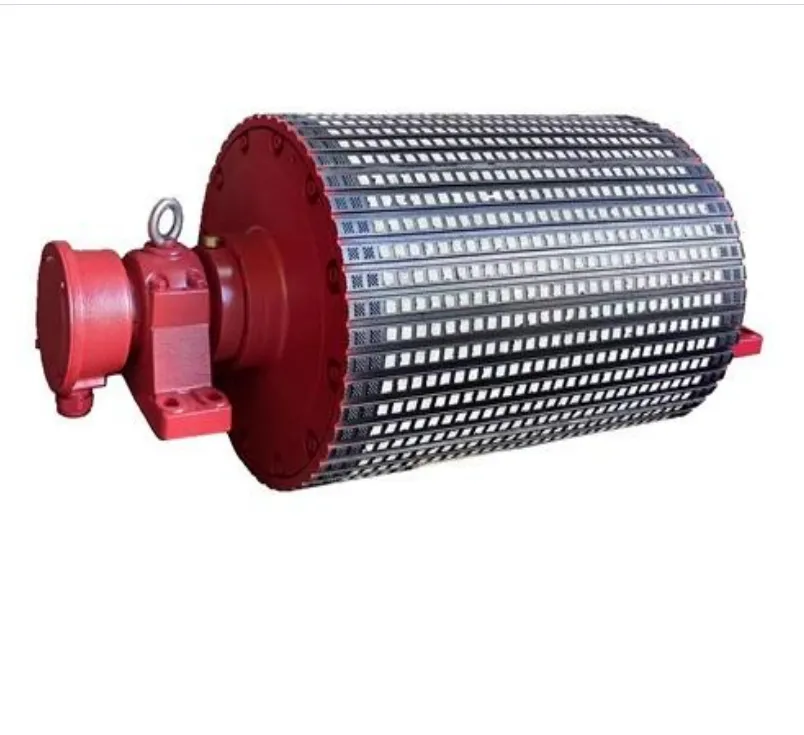
BEND PULLEY
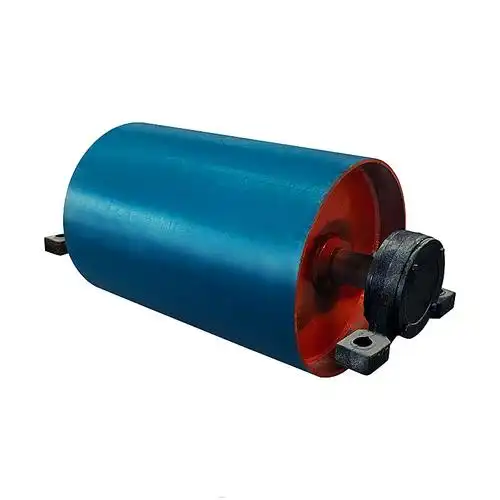
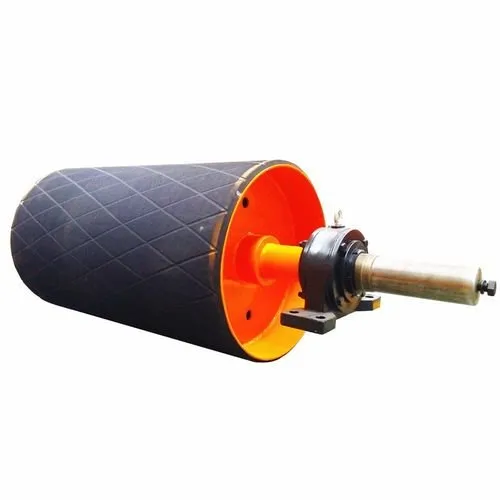
CONVEYOR BEND PULLEY
The bend pulley is used to change the direction of the conveyor belt and increase belt wrap around the drive pulley. By guiding the belt smoothly along the conveying path, bend pulleys help reduce belt tension, improve traction at the drive pulley, and ensure stable system operation.
Manufactured from high-quality steel with precision machining, BisonConvey bend pulleys are designed for durability and long service life. They can be supplied with plain steel surfaces or rubber lagging depending on application requirements. Standard sizes cover belt widths from 500mm to 1400mm with pulley diameters from 320mm to 1250mm — per TD series industrial specifications.
- Drawing-based inquiries
- Options confirmed per quotation
- Document requests welcome
TECHNICAL DATA
WHY CHOOSE THIS PRODUCT
- Smooth belt direction control minimizes stress on splices
- Robust steel construction with precision machining
- Optional rubber lagging for moist or high-friction environments
- Improved belt tracking via precision-balanced shells
- Enhanced conveyor efficiency through stable redirection
- Extended belt and pulley life with reduced wear points
- Customizable to system needs (diameter, width, bearing)
APPLICATIONS
How to Read a Bend Pulley Specification
Every conveyor has one drive pulley and several pulleys that do not drive anything. They look similar and are often quoted interchangeably, but they sit in different positions and do different jobs. A typical bend pulley spec reads TD4 · Ø 630 · B 1000 · 180° wrap · 1310 bearing.
- TD4
- Standard series (TD1-TD6)A size-and-duty series covering the common belt width and diameter combinations. The series number is shorthand for a set of shell, shaft and bearing dimensions — useful for ordering, but always confirm against the general arrangement drawing.
- Ø 630
- Pulley diameterThe outside diameter of the shell, from 320 mm to 1250 mm. This is the number that matters most: it must be large enough for the belt carcass to bend around without fatiguing, and it is set by the carcass rating, not by the pulley's position.
- B 1000
- Belt widthThe belt the pulley serves, 500 mm to 1400 mm. The shell face is made wider than the belt so the belt cannot run off the edge under normal mistracking.
- 180°
- Wrap angleHow far the belt bends around this pulley. A bend pulley used to increase wrap at the drive can approach 180°, while a simple direction change may be far less. Wrap angle drives both the bending stress on the belt and the load into the shaft and bearings.
- 1310
- Bearing seriesThe bearing arrangement carrying the pulley load, from 1310 up to 3520 series depending on duty. Bearing choice follows from the resultant force on the pulley, which follows from belt tension and wrap angle.
Shaft diameter is sized from bending and torsion for your specific tensions and bearing centres, not read off a catalogue range. Confirm the actual shaft dimension against the general arrangement drawing for your duty rather than assuming a standard figure.
Bend Pulley Selection Guide
Most bend pulley errors start with ordering the wrong pulley for the position. Establish the position first, then the loads, then the diameter — in that order.
Identify which pulley position you are actually buying
A conveyor has a drive (head) pulley that transmits power, a tail pulley at the loading end, a take-up pulley on the tensioning device, snub pulleys that increase wrap at the drive, and bend pulleys that change the belt's direction along its path. They are different components. Name the position before you name the pulley.
Establish belt tension at that position
The force on a non-drive pulley comes from belt tension and how far the belt wraps around it. A pulley with a large wrap angle carries a much higher resultant load than one that only nudges the belt a few degrees. Calculate tension for the conveyor before sizing anything.
Calculate belt tensionSet the diameter from the belt carcass, not the position
Minimum pulley diameter is governed by the belt's carcass — its rating, ply count or cord construction — because that is what determines how tightly the belt can bend without fatiguing. A heavier carcass needs a bigger pulley everywhere it bends, including at bend and snub pulleys where people are tempted to economise.
Check minimum pulley diameterDecide whether this pulley needs lagging
A bend pulley transmits no drive torque, so it does not need lagging for traction. Lagging is worth specifying where the pulley contacts the dirty side of the belt in wet or sticky conditions, because it sheds build-up that would otherwise cause mistracking. In clean, dry duty plain steel is usually adequate.
Confirm shaft, bearings and balancing for the duty
Bearings are chosen from the resultant pulley load; the shaft is sized from bending and torsion at your bearing centres. Dynamic balancing matters more as belt speed rises — at low speed it is optional, at high speed an unbalanced pulley induces vibration that shortens bearing life.
Common Specification Mistakes
Four errors that recur on non-drive pulley enquiries. The first is by far the most common and causes the other three.
Ordering the wrong pulley for the position
Bend, snub, tail and take-up pulleys are routinely quoted as though interchangeable. They carry different loads and sit in different arrangements. State the position — where on the conveyor, and what the pulley is there to do — in the enquiry, and the right component follows. Give only a diameter and a width, and you will get whatever the supplier assumes.
Undersizing the diameter because it is 'only a bend pulley'
Minimum diameter comes from the belt carcass, and the belt does not care which pulley is bending it. A bend pulley chosen smaller than the carcass allows imposes a fatigue cycle on every pass. The failure shows up in the belt, not the pulley, which is why the cause is often missed.
Skipping lagging where the belt runs dirty and wet
A plain steel bend pulley contacting the dirty side of the belt in wet or sticky material accumulates build-up. Build-up creates a high spot, the high spot pushes the belt off centre, and the result is chronic mistracking blamed on alignment. Lagging on the pulleys that touch the dirty side is cheap insurance in those conditions.
Ignoring balancing on high-speed conveyors
Dynamic balancing is optional on slow belts and genuinely important on fast ones. An unbalanced pulley at speed induces vibration that works through the bearings and structure, shortening bearing life and loosening fasteners. Specify balancing according to belt speed rather than treating it as an upsell.
FREQUENTLY ASKED QUESTIONS
What is the difference between a bend pulley and a snub pulley?
A bend pulley changes the direction of the belt along its path — for example routing the return strand around an obstacle or into a take-up. A snub pulley sits close to the drive pulley and pushes the belt against it to increase the wrap angle, which increases the traction the drive can transmit. A snub pulley exists to help the drive; a bend pulley exists to route the belt.
How is a bend pulley different from a tail or take-up pulley?
The tail pulley sits at the loading end and turns the belt back into the carrying run. The take-up pulley is mounted on the tensioning device — gravity tower or screw take-up — and moves to maintain belt tension. A bend pulley does neither: it simply redirects the belt at a point along the path. All three are non-drive pulleys, which is why they are often confused.
How do I choose the diameter of a bend pulley?
From the belt carcass, not from the pulley's role. The minimum diameter is set by how tightly the carcass can be bent repeatedly without fatigue — a heavier carcass or a steel cord belt needs a larger pulley. Undersizing a bend pulley to save cost puts a fatigue cycle into the belt at every pass, and the damage shows up as carcass failure long before the pulley itself wears.
Does a bend pulley need rubber lagging?
Not for traction — it transmits no drive torque. Lagging is worth having where the pulley runs against the dirty side of the belt in wet or sticky material, because a lagged surface sheds build-up that would otherwise create a high spot and push the belt off track. In clean dry conditions plain steel is normally sufficient and cheaper.
Why does wrap angle matter on a non-drive pulley?
Because it determines the resultant force the pulley, shaft and bearings must carry. A pulley with 180° of wrap sees a far larger load than one deflecting the belt slightly, even at the same belt tension. Wrap angle also sets how much bending the belt undergoes, which feeds back into the minimum diameter requirement.
Should a bend pulley be crowned to help tracking?
Crowning is sometimes used on pulleys to help centre the belt, but it is not a substitute for correct alignment and it interacts with the belt's own stiffness. Persistent mistracking is usually a symptom of alignment, loading or build-up rather than something a crowned bend pulley will cure. Fix the cause first; consider self-aligning idlers where tracking needs active correction.
Free tools for sizing this product
Run the numbers before you send an RFQ — no signup, no email.
Download the CONVEYOR BEND PULLEY spec sheet
Full specifications, cover grades, tensile classes, and application recommendations — one PDF to share with your engineering team or procurement.
PDF · A4 · English