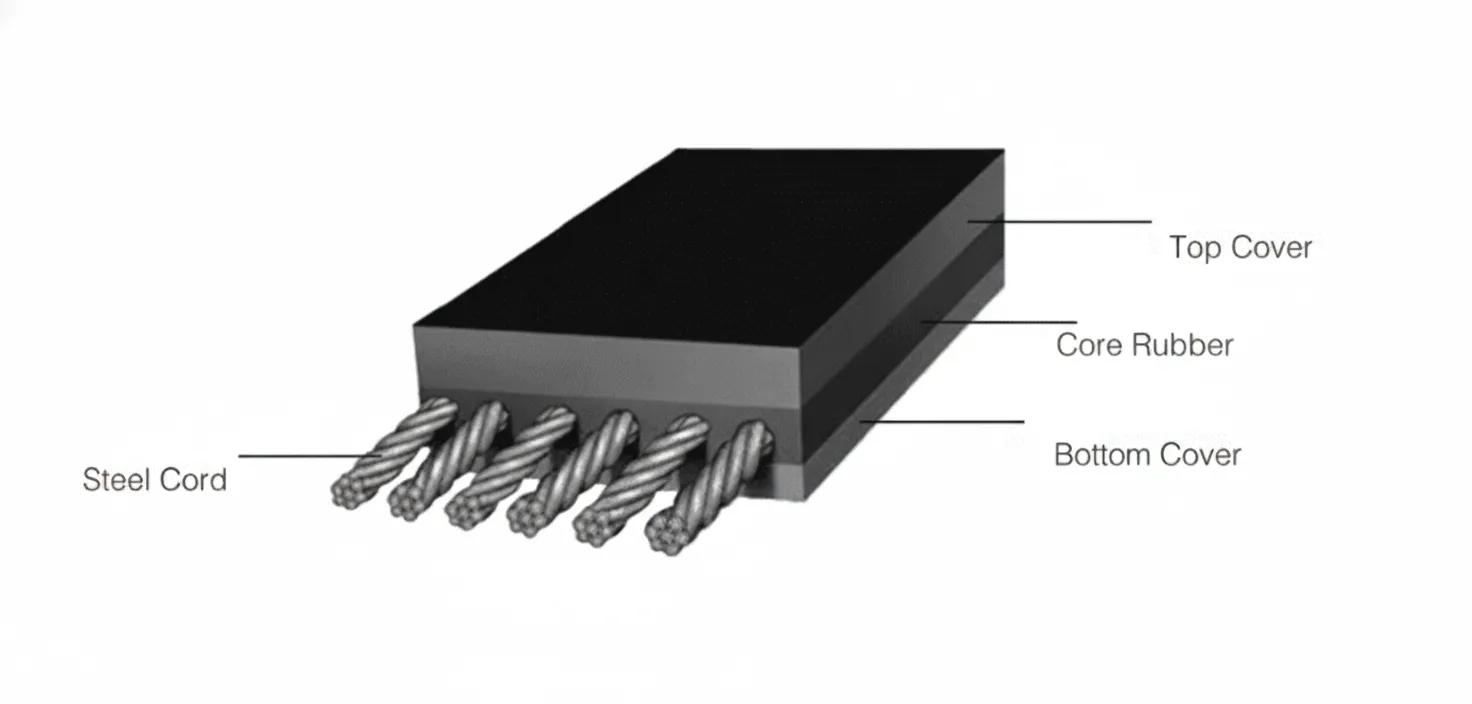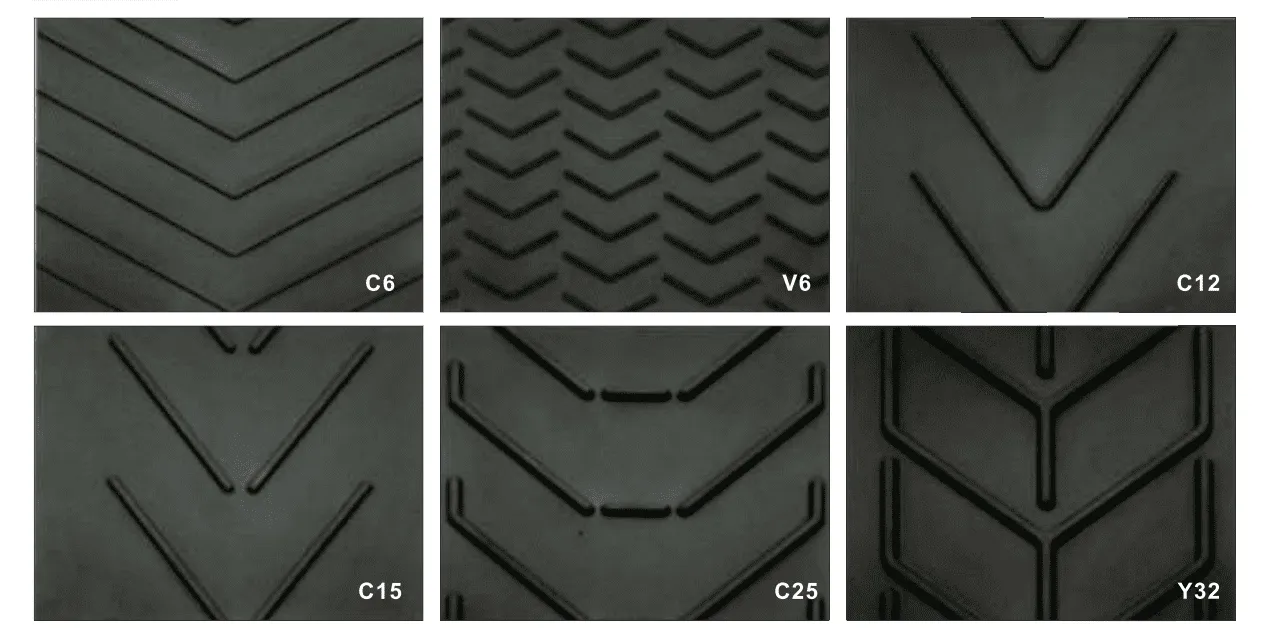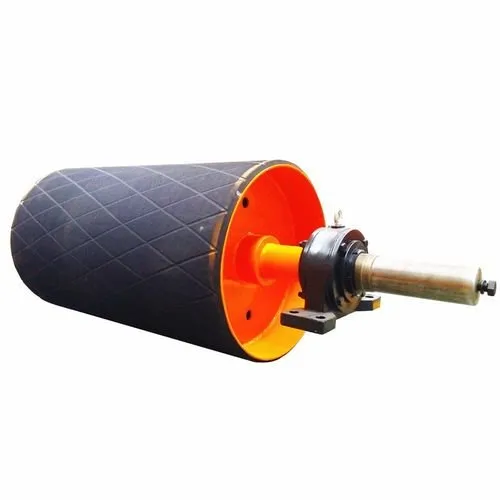
FABRIC CONVEYOR BELTS
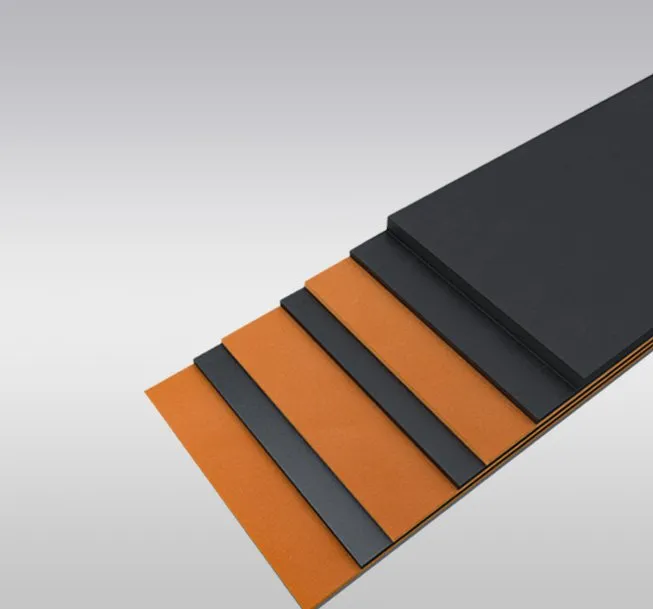

EP/NN MULTI-PLY FABRIC CONVEYOR BELTS
EP/NN multi-ply fabric conveyor belts suit bulk-material conveyors when a textile carcass meets the calculated tension, elongation, pulley-diameter and splice requirements. They serve many plant, quarry, port and transfer duties; long or high-tension routes may instead require a steel-cord construction.
The listed standard range covers 500–2400 mm widths, 2–6 plies and EP100–EP500 tensile classes. Cover compound, cover thickness and the final tensile class are confirmed against the actual material, loading, temperature and splice details before quotation.
Technical content reviewed: 23 September 2026. Final belt construction and documentation are confirmed against the operating conditions in each quotation.
- Drawing-based inquiries
- Options confirmed per quotation
- Document requests welcome
TECHNICAL DATA
WHY CHOOSE THIS PRODUCT
- EP or NN textile carcass options for bulk-material conveying
- Multi-ply construction selected around loading, impact and pulley conditions
- Troughability and flexibility evaluated with the conveyor geometry
- Cover compounds selected for the stated abrasion, heat, oil or flame exposure
- Standard widths and tensile classes with project-specific configuration review
- Purchase specifications can state the agreed standard, test method and inspection requirements
APPLICATIONS
From fabric construction to order evidence
The five stages below summarize a supplier-provided description of multi-ply rubber-covered fabric belt production. They are not a verified account of a BisonConvey-owned factory or evidence that a particular belt has passed testing. Steel-cord and PVC/PU constructions require their own process review.
Supplier-provided workshop reference views
Shared for website use. The photographed equipment is not attributed to a BisonConvey-owned factory or mapped to every stage below. Confirm the construction and process route proposed for your belt.
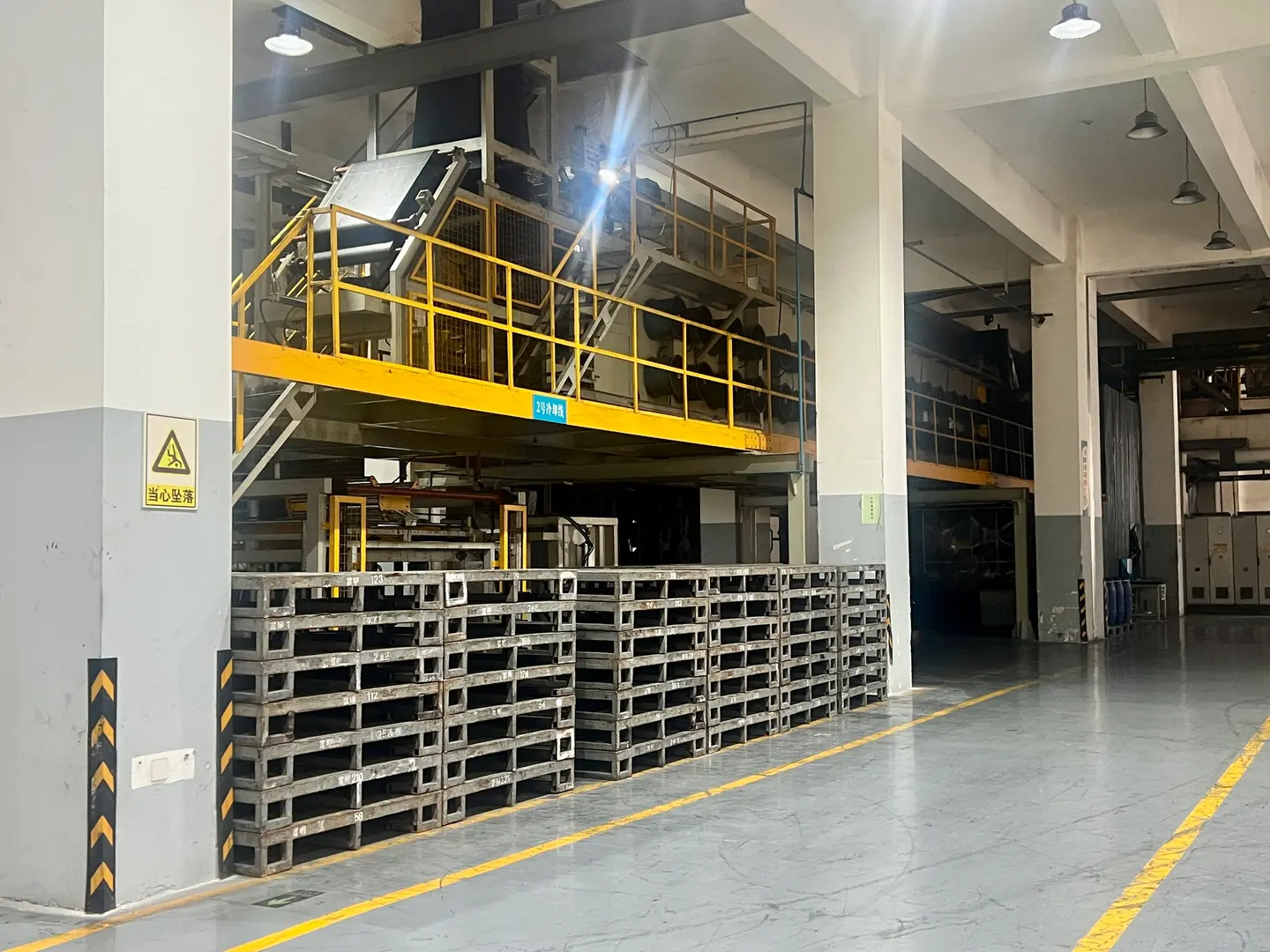
Processing area reference
Use this supplier-provided workshop view as context for process questions. Confirm the fabric construction and production route for your order separately; the image is not mapped to a specific EP or NN belt.
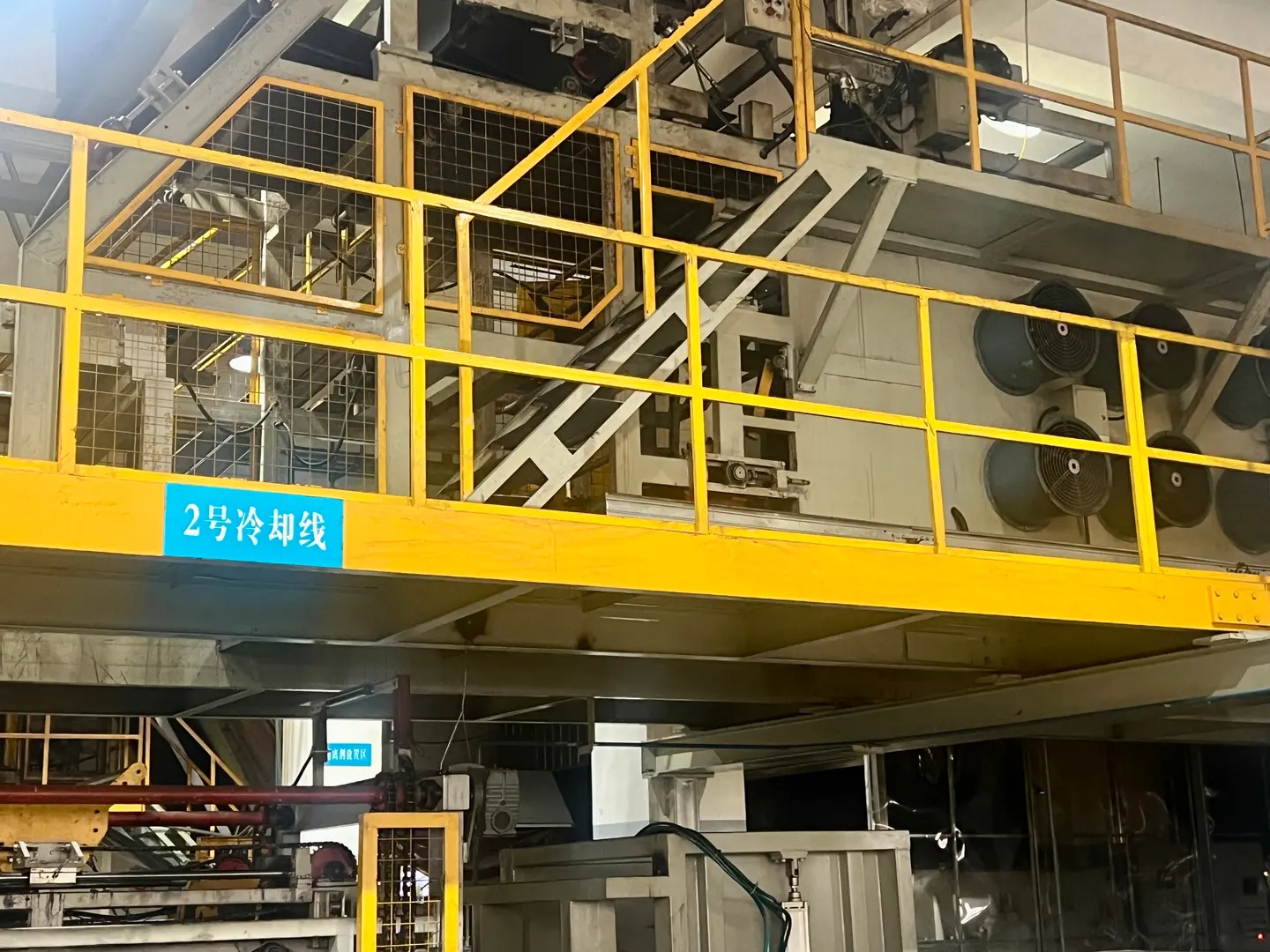
Cooling-line equipment
The equipment sign identifies a cooling line. Cooling in production does not establish cold-resistant service performance; request the product-specific documents relevant to your application.
01Rubber mixing
Preparation of rubber compounds for the fabric layers and covers. Ask which compound designation is proposed for your operating requirements.
02Fabric calendering
Application of rubber to the reinforcing fabric. Ask for the specified fabric construction and relevant adhesion requirements.
03Ply building & covers
Assembly of coated fabric plies with top and bottom covers. Confirm the complete belt strength designation, ply count and cover thicknesses.
04Vulcanization
Curing of the assembled rubber-and-fabric belt. Ask the supplier which production and inspection records can be provided for the order; no universal curing settings are specified here.
05Finishing & roll identification
Cooling, trimming, inspection and coiling. Agree dimensional checks, roll identification and packing-list/document references before dispatch.
Documents to request with the quotation
Request the supplier datasheet, agreed dimensional tolerances, construction/cover designation, applicable test methods and acceptance criteria, and available inspection reports. Confirm the issuing party, product or batch reference, test conditions and any deviations. A process description or website PDF is not a batch acceptance report.
Use the official ISO 14890 record to check textile-belt scope and the edition required by your purchase specification. Document availability and testing scope are confirmed per order, not promised for every belt.
How to Read a Fabric Belt Designation
A fabric-belt designation gives a practical starting point for a quotation: carcass material, tensile class, ply count, cover thickness and cover notation. Confirm the standard edition, test method and any project-specific requirements in the purchase specification, because ISO and DIN notation is not interchangeable by name alone. The example below decodes EP 500/4 6+2 Y as a format, not as a universal selection rule.
- EP
- Carcass fabric typeEP means a polyester warp running lengthwise and a polyamide/nylon weft running crosswise. NN uses nylon in both directions. In comparable constructions, EP commonly has lower lengthwise elongation while NN can offer greater elasticity. Take-up travel, impact behaviour and troughability must be checked against the actual construction and conveyor geometry.
- 500
- Full-belt tensile strength (N/mm)The rated breaking strength per millimetre of belt width, measured across all plies together — not per ply. An EP 500 belt at 800 mm width therefore has a total rated breaking strength of 400 kN. That rating is not the allowable working tension: the final design must account for the conveyor calculation, splice method, safety factor and the applicable project standard.
- /4
- Number of fabric pliesFour fabric layers bonded together with rubber skim coats. More plies can raise bending stiffness, which affects minimum pulley diameter and transition length. At an equal tensile class, fewer plies of stronger fabric can reduce stiffness, but the choice still depends on available pulley geometry, loading conditions and the supplier's construction data.
- 6+2
- Cover thickness, top + bottom (mm)A 6 mm top cover and a 2 mm bottom cover. The top cover faces the material and carries most impact and abrasion; the bottom cover runs over idlers and pulleys. Select both values from the material abrasiveness, maximum lump size, drop height, support arrangement and minimum pulley diameter rather than using one cover ratio for every duty.
- Cover grade
- Cover grade (DIN 22102)Y, W, X and G labels are commonly encountered in DIN-style documents, while ISO-style documentation can use different cover-class notation. State the required abrasion, oil, temperature or flame behaviour together with the applicable test method and acceptance criterion; do not select a cover only from a letter printed on an old belt.
ISO 14890 is a useful reference for textile construction conveyor belts, but the order should state the applicable edition, cover test method and required result.
Use the official ISO 14890 standard record alongside the project specification.
Fabric Belt Selection Guide
These five parameters create a disciplined first pass for a fabric-belt enquiry. They narrow the options, but the final construction still needs confirmation against the conveyor calculation and operating conditions.
Required tensile class
Start from the effective tension Te, calculated from conveyor length, lift, capacity and belt speed. Resolve the peak tension T1 at the drive pulley, divide by belt width and apply the safety factor required for the chosen splice method and project standard. Select an available tensile class only after the resulting construction is checked with the supplier.
Use the Belt Tension Calculator to size Te and T1 in under a minute.Belt width from capacity
Width follows from required throughput, belt speed, material bulk density, surcharge angle and trough angle. Standard widths run from 500 mm to 2400 mm. Where throughput sits between two widths, round the width up rather than raising belt speed — higher speed accelerates cover wear, increases spillage and raises the impact energy at every transfer point.
The Belt Width Calculator solves width from your target t/h.Cover grade for the material
Match the cover compound to what the belt actually carries and the condition at the loading point. Record material abrasiveness, maximum lump size, oil or chemical exposure, temperature and any flame requirement. Agree the grade designation only after the corresponding test method and acceptance criterion are confirmed in the purchase specification.
Ply count vs pulley geometry
A higher ply count can mean a stiffer belt, which can require a larger minimum pulley diameter and a longer transition distance. If terminal pulleys are already fixed, as in a retrofit or replacement, check the proposed ply construction against that geometry before ordering.
Check minimum drum sizes with the Pulley Diameter Calculator (DIN 22101).Splice method
Splice method changes the allowable working tension and the final safety factor. A vulcanised splice and a mechanical fastener have different design, installation and maintenance implications. Decide the intended splice method before finalising the tensile class, then confirm the requirement against the applicable project standard.
Continue Your Belt Selection
Use these references to compare construction options, decode an existing belt and prepare a replacement enquiry. They support, but do not replace, a review of the conveyor's calculated tensions and operating conditions.
Common Specification Mistakes
Four errors appear repeatedly in fabric belt enquiries; each one either shortens belt life or inflates cost with no operational benefit in return.
Specifying tensile class without declaring the splice method
The safety factor — and therefore the tensile class — depends directly on how the belt will be joined. A design based on a vulcanised splice should not be changed to mechanical fasteners without recalculating the applicable requirements. Declare the splice method first, then select the belt around it.
Over-specifying ply count instead of upgrading tensile class
More plies can increase bending stiffness, pulley-diameter requirements, transition length and belt mass. A stronger fabric with fewer plies may be suitable in some cases, but it must be checked against the actual pulley geometry, troughing requirement and available construction data.
Choosing cover grade on price rather than material abrasiveness
Cover grade is dictated by the material, loading point and required test performance, not by the unit price line on the quotation. Define the abrasion, cut, oil, heat or flame requirement and the acceptance test before comparing supplier proposals.
Ignoring transition distance at the terminal pulleys
As the troughed profile flattens approaching a pulley, the belt edges travel a longer path than the centre and can pick up additional tension. A transition that is too short can contribute to edge cracking and splice fatigue. Check transition geometry at both the drive and tail pulley against the selected construction and project requirements.
FREQUENTLY ASKED QUESTIONS
What is the difference between EP and NN conveyor belts?
EP belts use a polyester warp and a nylon weft; NN belts use nylon in both directions. In comparable constructions, EP commonly needs less take-up travel because its lengthwise elongation is lower, while NN can offer greater elasticity at a loading point. The right choice depends on calculated tension, take-up travel, impact, pulley geometry and the supplied construction data.
What does EP500/4 mean?
EP identifies a polyester-warp, nylon-weft carcass. 500 is the full-belt rated breaking strength in newtons per millimetre of width, measured across all plies together rather than per ply. The 4 is the number of fabric plies. An EP 500/4 belt at 1000 mm width therefore has a total rated breaking strength of 500 kN. Working tension must then be derived from the conveyor calculation, splice method and applicable safety factor.
How do I choose the right cover thickness?
Top cover thickness follows material abrasiveness, maximum lump size, drop height and loading-point support; the bottom cover is selected around the idler and pulley contact conditions. The listed standard range is 3–8 mm top and 1.5–3 mm bottom, but it is not a universal selection rule. Confirm the final cover build with the material data and conveyor geometry.
What safety factor should I use for fabric belts?
The safety factor depends on the belt construction, splice method, conveyor duty and project standard. A vulcanised splice and mechanical fasteners should not be treated as interchangeable. Confirm the selected safety factor with the conveyor designer and the supplier before setting the tensile class.
What is the maximum incline for a fabric conveyor belt?
The practical incline depends on the material's dynamic angle of repose, lump size, moisture, loading and belt surface. If a smooth fabric belt does not retain the material at the required incline, evaluate a chevron or sidewall construction rather than relying on a universal angle limit.
How long does a fabric conveyor belt last?
There is no reliable universal service-life figure. Cover wear, loading-point design, tracking, cleaning, splice condition and the actual material all affect replacement timing. Use inspection records, wear measurements and failure evidence to assess whether a new cover compound, construction or transfer-point correction is needed.
Free tools for sizing this product
Run the numbers before you send an RFQ — no signup, no email.
Download the EP/NN MULTI-PLY FABRIC CONVEYOR BELTS spec sheet
Full specifications, cover grades, tensile classes, and application recommendations — one PDF to share with your engineering team or procurement.
PDF · A4 · English