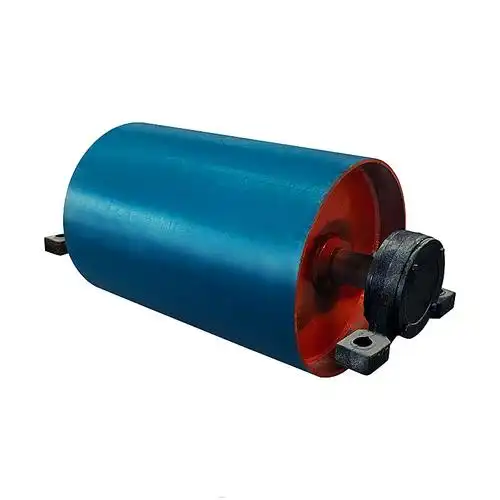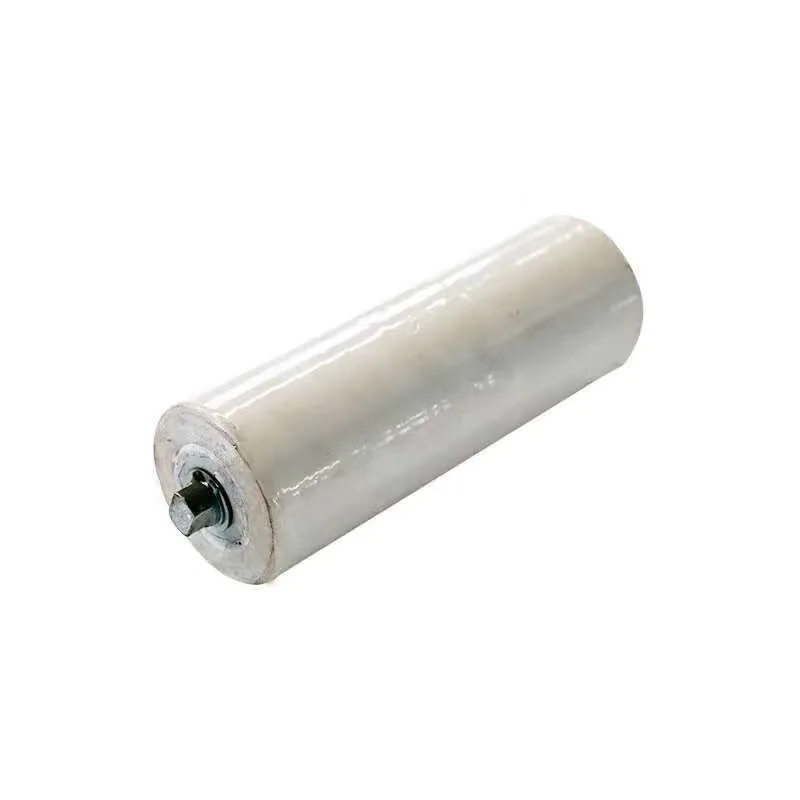
RUBBER-LAGGED PULLEY
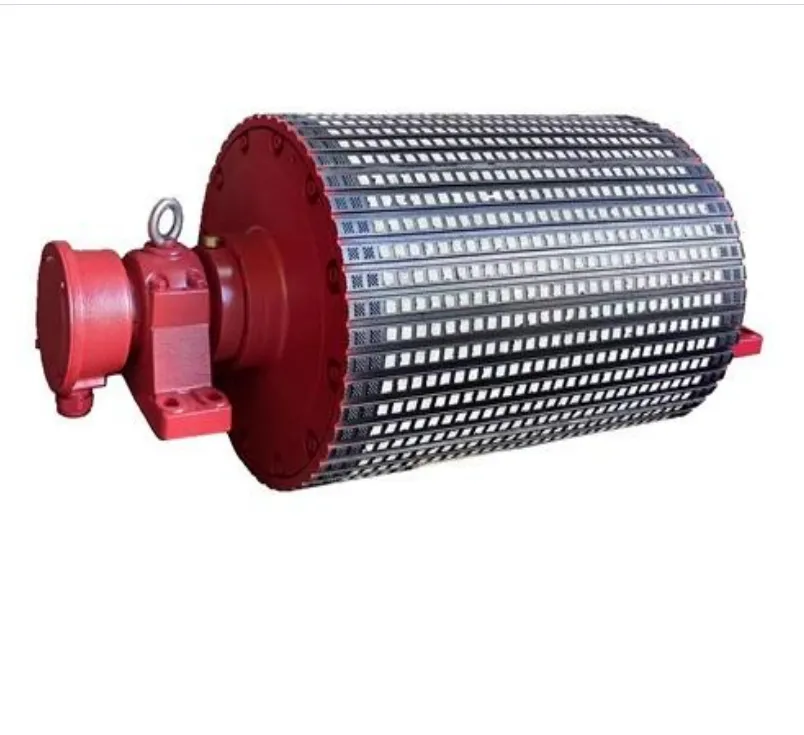
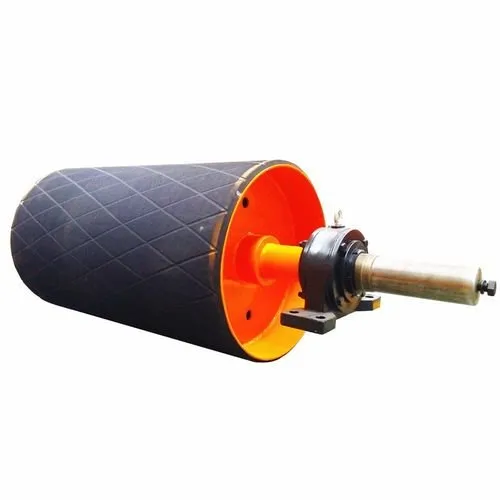
RUBBER-LAGGED CONVEYOR PULLEY
The rubber-lagged pulley enhances traction between the conveyor belt and pulley surface, reducing belt slippage and improving power transmission efficiency. High-quality rubber lagging is hot-vulcanized to the pulley surface — delivering a 5-10 year wear layer and extending conveyor belt life significantly compared with bare steel pulleys.
Rubber-lagged pulleys serve as drive pulleys, bend pulleys, or tail pulleys in belt conveyor systems. Plain rubber lagging provides baseline friction improvement; grooved (herringbone) lagging optimizes drainage in wet environments and delivers additional grip. Compared to bare steel, rubber lagging increases friction by 30-50% — eliminating belt slippage in demanding mining, port, and bulk handling applications.
- Drawing-based inquiries
- Options confirmed per quotation
- Document requests welcome
TECHNICAL DATA
WHY CHOOSE THIS PRODUCT
- 30-50% friction improvement over bare steel pulleys
- 5-10 year rubber wear layer reduces replacement frequency
- Plain or grooved patterns to match drainage/grip needs
- Stable belt movement improves overall power transmission
- Reduces belt abrasion and extends conveyor belt life
- Performs reliably in wet, dusty, or abrasive environments
- Cost-effective upgrade for eliminating belt slippage
APPLICATIONS
How to Read a Rubber-Lagged Pulley Specification
Lagging exists for one reason: to raise the friction between belt and pulley so the drive can transmit torque without the belt slipping. Everything else — pattern, thickness, bonding — follows from that. A typical spec reads Ø 630 · herringbone · 12 mm · hot-vulcanized · Q345 shell.
- Ø 630
- Pulley diameterThe finished diameter over the lagging. Worth stating explicitly which diameter a quote refers to: lagging adds twice its thickness to the bare shell, so a 630 mm finished pulley with 12 mm lagging sits on a 606 mm shell. Belt speed and minimum-diameter checks both use the finished figure.
- Herringbone
- Lagging patternPlain or grooved. Plain gives maximum contact area and suits clean, dry duty. Grooved patterns — herringbone or diamond — cut channels that push water and fines out from between belt and pulley, which is what preserves grip in wet conditions.
- 12 mm
- Lagging thicknessTypically 8 to 20 mm. This is a wear reserve: the lagging is designed to be consumed and replaced over years while the shell underneath survives. Thicker lagging buys service life on abrasive duty; it also raises the finished diameter.
- Hot-vulcanized
- Bonding processHot vulcanization bonds the rubber to the steel as a single body, which is why it outlasts cold-bonded or strip lagging on heavy drive duty. The bond, not the rubber, is usually what fails first on a poorly made pulley.
- Q345
- Shell materialCarbon steel Q235 or Q345 for the shell beneath the lagging. The shell carries the load; the lagging carries the friction. They are specified independently.
Lagging raises the friction coefficient between belt and pulley, and the transmissible torque rises with that coefficient and with the wrap angle. That relationship is why lagging and wrap angle are alternative ways to solve the same slip problem — and why adding a snub pulley is sometimes cheaper than re-lagging.
Rubber-Lagged Pulley Selection Guide
Lagging is a traction decision first and a wear decision second. Work out whether you have a slip problem, then how wet and abrasive the duty is, then choose the pattern and thickness.
Confirm the pulley actually needs traction
Only the drive pulley transmits torque, so only the drive genuinely needs lagging for grip. Bend, tail and take-up pulleys transmit nothing — lagging them is worthwhile for shedding build-up in wet or sticky material, not for traction. Lagging every pulley on a clean dry conveyor spends money for no gain.
Check whether you have a slip problem or a power problem
Belt slip at the drive shows up as squeal, belt-speed loss under load, or scorching at the pulley. If the drive cannot transmit the torque, lagging raises the friction available; increasing the wrap angle with a snub pulley does the same thing by a different route. Calculate the tensions before deciding which is cheaper.
Calculate belt tensionPick the pattern for how wet the duty is
Plain lagging maximises contact area and is the right choice for clean, dry, indoor duty. Grooved herringbone or diamond patterns sacrifice some contact area to gain drainage channels that expel water and fines from the interface. In wet, muddy or washdown conditions the grooved pattern keeps grip that plain lagging loses.
Set thickness from abrasiveness and desired service life
Lagging is a consumable wear layer, typically 8 to 20 mm. Abrasive material and high belt tension consume it faster, so thicker lagging buys years between re-lagging on hard duty. Remember it also increases the finished pulley diameter, which feeds back into your minimum diameter and belt speed figures.
Check minimum pulley diameterDecide between rubber and ceramic for the duty
Rubber lagging suits the great majority of drives. Where tension is very high, the material is wet and abrasive, and rubber wears out too quickly to be economic, ceramic lagging offers far higher grip and life at higher cost and with more aggressive belt-cover wear. Escalate to ceramic when rubber demonstrably fails to last, not by default.
Common Specification Mistakes
Four errors that recur on lagging enquiries. The first two waste money; the third and fourth cause the lagging to underperform or fail early.
Lagging every pulley on a clean, dry conveyor
Only the drive transmits torque, so only the drive needs lagging for grip. On a clean, dry indoor conveyor the bend and tail pulleys gain nothing from lagging. The money is better spent on adequate thickness at the drive. In wet or sticky duty the calculation changes — there, lagging the non-drive pulleys earns its keep by shedding build-up.
Specifying plain lagging on wet duty
Plain lagging has the biggest contact area, which is exactly why it fails in the wet: water trapped at the interface has nowhere to go and the belt loses grip. Grooved herringbone or diamond patterns exist to drain that interface. Choosing plain because it looks like more rubber-on-belt contact is a common and expensive misreading.
Forgetting that lagging changes the finished diameter
Lagging adds twice its thickness to the shell. A pulley quoted at bare-shell diameter and one quoted over the lagging are different components, and the finished figure is what governs belt speed and the minimum-diameter check against the belt carcass. Always state which diameter a figure refers to.
Re-lagging repeatedly instead of fixing the real cause
Lagging that wears out unusually fast is often a symptom, not the problem — excessive belt tension, a drive that is undersized for the duty, material trapped at the interface, or a wrap angle too small for the torque. Replacing the lagging on a cycle without asking why it is being consumed treats the symptom and pays for it again every time.
FREQUENTLY ASKED QUESTIONS
What does lagging actually do?
It raises the coefficient of friction between the belt and the pulley face. Because the torque a drive pulley can transmit rises with both the friction coefficient and the wrap angle, more friction means more transmissible power before the belt slips. A bare steel pulley on a wet belt has very little grip; lagging restores it — commonly cited as a 30 to 50% friction improvement over bare steel.
Plain or grooved lagging — which should I choose?
Plain gives the largest contact area and is the better choice in clean, dry conditions. Grooved patterns such as herringbone or diamond give up some contact area in exchange for channels that squeeze water and fines out from between the belt and the pulley. If the conveyor runs wet, muddy or is washed down, choose grooved — plain lagging aquaplanes and loses grip exactly when you need it.
Which pulleys should be lagged?
The drive pulley, always, because it is the only one transmitting torque. Bend, tail and take-up pulleys do not need lagging for traction, but lagging them is worth considering where they contact the dirty side of the belt in wet or sticky material, because a lagged surface sheds build-up that would otherwise create a high spot and push the belt off track.
How long does rubber lagging last?
Typically five to ten years, but that range is wide because it depends entirely on belt tension, material abrasiveness and how wet the duty is. Lagging is a designed consumable — the point is that the wear layer is sacrificed over years while the steel shell underneath survives and is simply re-lagged. Thicker lagging on abrasive duty buys more years between re-lagging.
Why does hot vulcanization matter?
Because on a heavy drive it is usually the bond, not the rubber, that fails first. Hot vulcanization fuses the rubber to the steel as one body and withstands the shear the drive imposes at the interface. Cold-bonded and strip lagging are quicker and cheaper to apply, and have their place on lighter duty or in-situ repair, but they are more vulnerable to peeling under sustained high drive torque.
When should I move from rubber to ceramic lagging?
When rubber demonstrably does not last — very high tension combined with wet, abrasive material, where the wear layer disappears fast enough that re-lagging intervals become uneconomic. Ceramic gives substantially higher grip and life, but costs more and is harder on the belt's bottom cover. Treat it as an escalation for a proven problem rather than as a general upgrade.
Free tools for sizing this product
Run the numbers before you send an RFQ — no signup, no email.
Download the RUBBER-LAGGED CONVEYOR PULLEY spec sheet
Full specifications, cover grades, tensile classes, and application recommendations — one PDF to share with your engineering team or procurement.
PDF · A4 · English