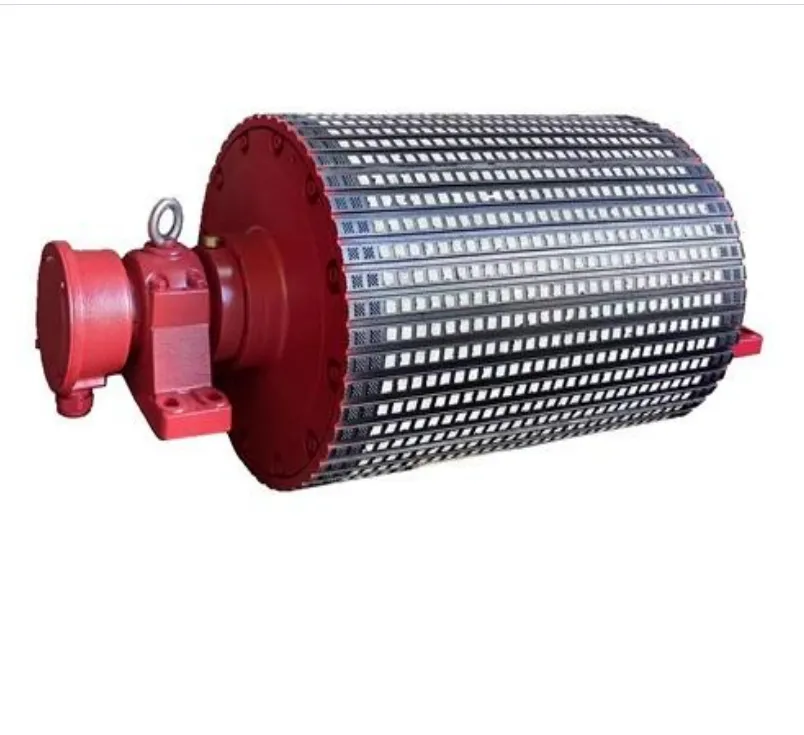
MOTORIZED DRIVE ROLLER (MDR)
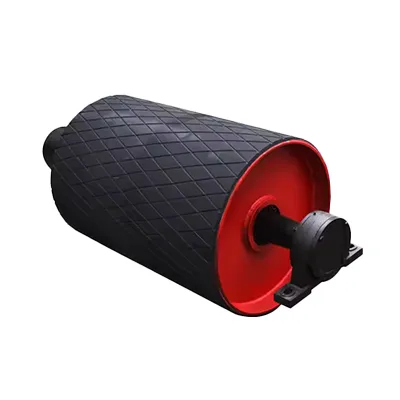
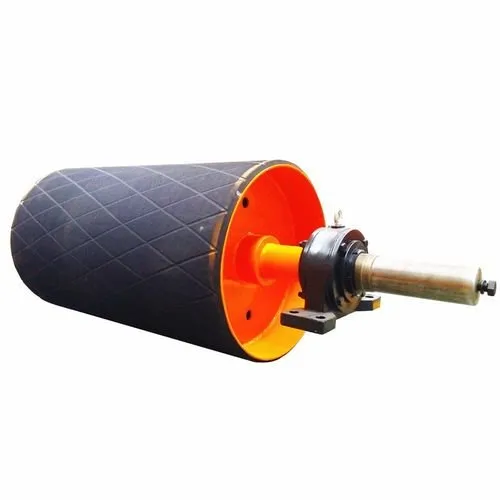
MOTORIZED DRIVE ROLLER (MDR)
The motorized drive roller (MDR) is an integrated conveyor drive solution that combines the motor, gearbox, and drive roller into a single compact unit. Designed for modern automated conveying systems, MDRs provide efficient power transmission while reducing system complexity, noise, and maintenance requirements.
With its sealed structure and precise speed control, the motorized drive roller delivers smooth and reliable operation. Compared with traditional external motor and chain-driven systems, MDRs offer higher energy efficiency, safer operation, and easier installation. They are ideal for conveyor lines requiring flexible control, modular design, and intelligent automation — warehouses, e-commerce fulfillment, airport baggage, manufacturing lines.
- Drawing-based inquiries
- Options confirmed per quotation
- Document requests welcome
TECHNICAL DATA
WHY CHOOSE THIS PRODUCT
- Motor + gearbox + roller in one compact unit saves space
- Direct drive design reduces power loss vs external motors
- Low noise sealed operation improves workplace comfort
- Fewer mechanical components mean less wear and maintenance
- Eliminates exposed chains and external motors for cleaner safety
- Precise zone-controlled speed for automated sorting
- Easy installation and modular replacement
APPLICATIONS
How to Read a Motorized Drive Roller Specification
A motorized drive roller — MDR, also written motorised driven roller — packs the motor, the gearbox and the roller into one tube. It is a unit-load product: cartons, totes and parcels on a roller conveyor, not bulk material on a belt. A typical spec reads Ø 50 · 24 VDC · i 20:1 · ZPA · CE.
- Ø 50
- Roller tube diameterThe outside diameter of the driven tube. It has to suit the conveyor frame and the smallest item you convey — a package must always be supported by at least three rollers, so the roller pitch and therefore the diameter follow from your smallest carton, not your largest.
- 24 VDC
- Supply voltageTypically 24 or 48 VDC. Low-voltage DC is a large part of why MDR exists: it is safe to work around, needs no motor guarding of the kind an external AC motor and chain drive would, and integrates directly with the control cards that run the zones.
- i 20:1
- Gear ratioThe ratio between motor and roller sets the trade-off between speed and torque. For a given motor you can have a fast roller or a strong one, not both. This is the single most consequential number on the spec and the one most often left to the supplier to guess.
- ZPA
- Control modeZero pressure accumulation — each zone runs independently, so items queue without pressing against one another. This is the capability a single centralised motor driving a whole line cannot give you, and usually the reason MDR was chosen in the first place.
- CE
- CertificationCE and RoHS for the European market. Because the MDR is an integrated motorised assembly rather than a passive roller, its certification is the drive's certification, not just a material declaration.
MDR and drum motor are related but not interchangeable. A drum motor is generally a heavier-duty AC unit driving a belt, often in bulk or process duty. An MDR is a low-voltage DC unit driving unit loads on a roller conveyor, designed around zone control. Ask for the one that matches your load type, not the one whose name sounds closer.
Motorized Drive Roller Selection Guide
MDR selection is dominated by two questions: is this the right kind of conveyor at all, and what speed-versus-torque compromise does the duty need. Get those right and the rest is configuration.
Confirm this is unit-load conveying, not bulk
MDR moves discrete items — cartons, totes, trays, parcels — on a roller conveyor. It is not a bulk-material product: loose ore, aggregate, grain or coal on a troughed belt need a conventional drive pulley and motor, not an MDR. This is the disqualifying question, and it is worth asking before anything else.
Establish the load per zone and the heaviest single item
Size on the worst case, not the average. Work out the mass a single zone must start and stop, and separately the heaviest individual item that will ever land on it. Accumulation makes this worse than it first looks: a zone holding several queued items starts a much larger mass than a zone moving one.
Choose speed or torque — the gear ratio cannot give both
The gear ratio trades one against the other. Decide which the application actually needs: a sortation line wants throughput and therefore speed; a line handling heavy totes or feeding an incline wants torque. Specify the conveying speed you require and let the ratio follow, rather than accepting a default ratio and discovering the torque is short.
Decide the control behaviour zone by zone
Continuous run is the simplest mode. Zero pressure accumulation lets items queue without contact pressure, which matters for fragile goods and for any line that must buffer ahead of a sorter or a scanner. ZPA is a control decision as much as a hardware one — it drives the card, sensor and wiring layout, so settle it early.
Confirm voltage, controllers and frame fitment
The roller is only part of the system: the control cards, power supplies and cabling are real cost and real cabinet space. Confirm the supply voltage, how many rollers each card drives, and that the roller ends and mounting suit your existing conveyor frame before committing to a standard.
Common Specification Mistakes
Four errors that recur on MDR enquiries. The first is an application error; the rest are sizing and system-scope errors.
Specifying MDR for bulk material duty
MDR is a unit-load product. Loose bulk on a troughed belt needs a conventional drive pulley sized from belt tension, or a drum motor. This is the one mistake no amount of torque or voltage will fix, because the product family is wrong for the load. Confirm the load type before anything else.
Asking for high speed and high torque from one ratio
The gear ratio trades speed against torque for a given motor; you cannot specify both at their maximum. Enquiries that state a fast conveying speed and a heavy per-zone load without acknowledging the trade-off get whichever compromise the supplier picks. Decide which one the application actually needs and specify that.
Sizing on average load rather than the accumulated worst case
A zone holding several queued items must start a far larger mass than a zone moving one. Sizing on the typical single carton looks fine until the line buffers ahead of a sorter and the zone stalls under a full queue. Size from the accumulated load and the heaviest individual item, not the average.
Costing the rollers and forgetting the control system
The control cards, power supplies and cabling are a real part of an MDR system's cost, cabinet space and commissioning effort. A quotation that compares bare MDR prices against a conventional motor-and-chain drive without the controls is not comparing like with like.
FREQUENTLY ASKED QUESTIONS
What is a motorized drive roller?
It is a conveyor roller with the motor and gearbox built inside the tube, so the roller drives itself instead of being driven by an external motor, chain or belt. You will see it written as MDR, motorised drive roller and motorised driven roller — all the same component. Because each roller is its own drive, a line can be divided into independently controlled zones.
How does MDR differ from a conventional motor and chain drive?
A conventional drive puts one external motor and a chain or belt transmission on a whole conveyor section, so the section runs or stops as one. An MDR line has drives distributed along it, so zones start and stop independently. The practical gains are zone control, no exposed chains to guard, lower noise, and fewer wearing transmission parts — at the cost of more electronics to specify and maintain.
Is an MDR the same as a drum motor?
They are related but not the same. A drum motor is typically a heavier-duty AC unit driving a belt, common in bulk handling and process applications. An MDR is typically a low-voltage DC unit driving unit loads on a roller conveyor and designed around zone control. If you are moving bulk material on a belt, a drum motor or a conventional drive pulley is the right family — not an MDR.
What is zero pressure accumulation?
A control mode in which each zone detects whether the zone ahead is occupied and stops its own roller instead of pushing items into the queue. Items accumulate without pressing against one another, which protects fragile goods and prevents jams. It is the capability that most distinguishes an MDR line from a single-motor line, and it is why MDR dominates parcel and fulfilment conveying.
24 V or 48 V — which should I use?
Both are common. Higher voltage delivers more power for the same current, which helps on longer lines and heavier loads and reduces cable losses; lower voltage keeps the supply and cabling simpler. In practice the choice is usually made by the control platform and the load, so settle it with the controls supplier rather than in isolation.
Can an MDR handle bulk material?
No. MDR is designed for discrete unit loads on a roller conveyor. Bulk material — ore, aggregate, coal, grain — needs a troughed belt conveyor with a conventional drive pulley sized from belt tension. Specifying an MDR for bulk duty is an application error rather than a sizing error, and no amount of torque fixes it.
Free tools for sizing this product
Run the numbers before you send an RFQ — no signup, no email.
Download the MOTORIZED DRIVE ROLLER (MDR) spec sheet
Full specifications, cover grades, tensile classes, and application recommendations — one PDF to share with your engineering team or procurement.
PDF · A4 · English