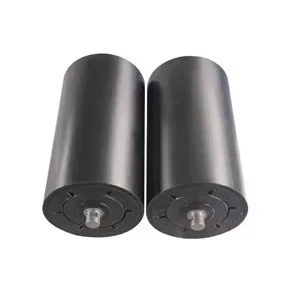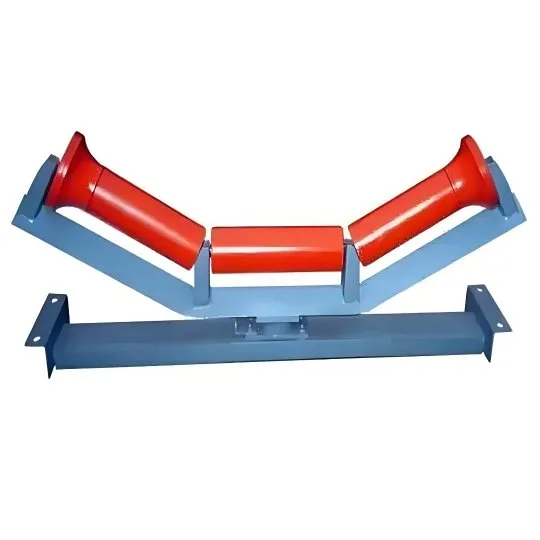
IMPACT IDLER
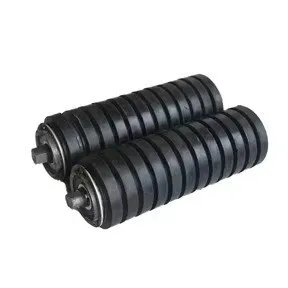
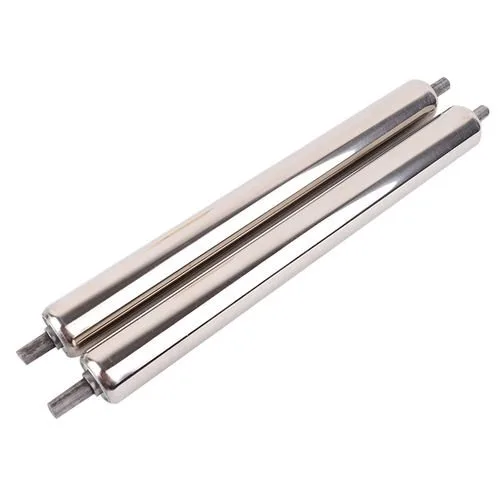
HEAVY-DUTY IMPACT IDLER
Impact idlers support the belt at loading and transfer points using cushioning rings. For a replacement inquiry, provide the finished diameter over the rings, face length, overall length, shaft details and mounting interfaces. A part number alone does not confirm interchangeability.
Include material, ring type or hardness, sealing and surface-protection requirements if known, together with drop height and material details. BisonConvey coordinates product-specific supplier review; dimensions, construction and inspection documents are confirmed with the quotation.
Read the conveyor idler types and selection guide. It shows where impact idlers fit alongside carrying, return and training idlers in a complete conveyor layout.
- Drawing-based inquiries
- Options confirmed per quotation
- Document requests welcome
SPECIFICATION INPUTS TO CONFIRM
PRODUCT-SPECIFIC REVIEW
- Replacement dimensions and end configuration reviewed together
- Ring, sealing and protection requirements can be submitted for review
- Drawings, photos or sample-based inquiries accepted for scope assessment
- Compatibility and inspection requirements confirmed before ordering
DUTY CONTEXTS TO DISCUSS
What to send for a impact idler quotation
Send what you know; a drawing, marked photo, BOM or sample-based request can help identify missing information. Options, compatibility and document availability require supplier confirmation for the specified item before ordering.
- Roller & frame dimensions
- Finished diameter over the rings, tube diameter if known, face length, overall length, shaft diameter and bracket/mounting drawing. Include units.
- Shaft ends & replacement reference
- Slotted, non-slotted, threaded or other end configuration; mark critical interfaces. An OEM part number or nominal size alone does not confirm interchangeability.
- Rings, seals & material
- Requested ring type/hardness, sealing, tube material and surface protection, if known. These are product-specific review items, not a promise that every option is available.
- Loading conditions
- Belt width, conveyed material, lump size, drop height and existing loading-zone arrangement. A marked photo or drawing can help when dimensions are incomplete.
- Quantity & approval documents
- Quantity, drawing revision, sample or inspection requirements, destination and packing/identification needs.
Sampling, inspection, packing, timing and support are agreed per order. No standard sample deadline or service-life guarantee is implied.
Impact idler product views
These views show rubber-ring impact idlers in packing crates. Compare the proposed drawing and ring arrangement with your loading-zone requirements rather than treating a photographed item as an approved replacement.
Supplier-provided product images, shared with website-use authorization. They are not evidence of a BisonConvey-owned factory, a completed customer project or tested performance. Configuration and supply scope require order-specific confirmation.
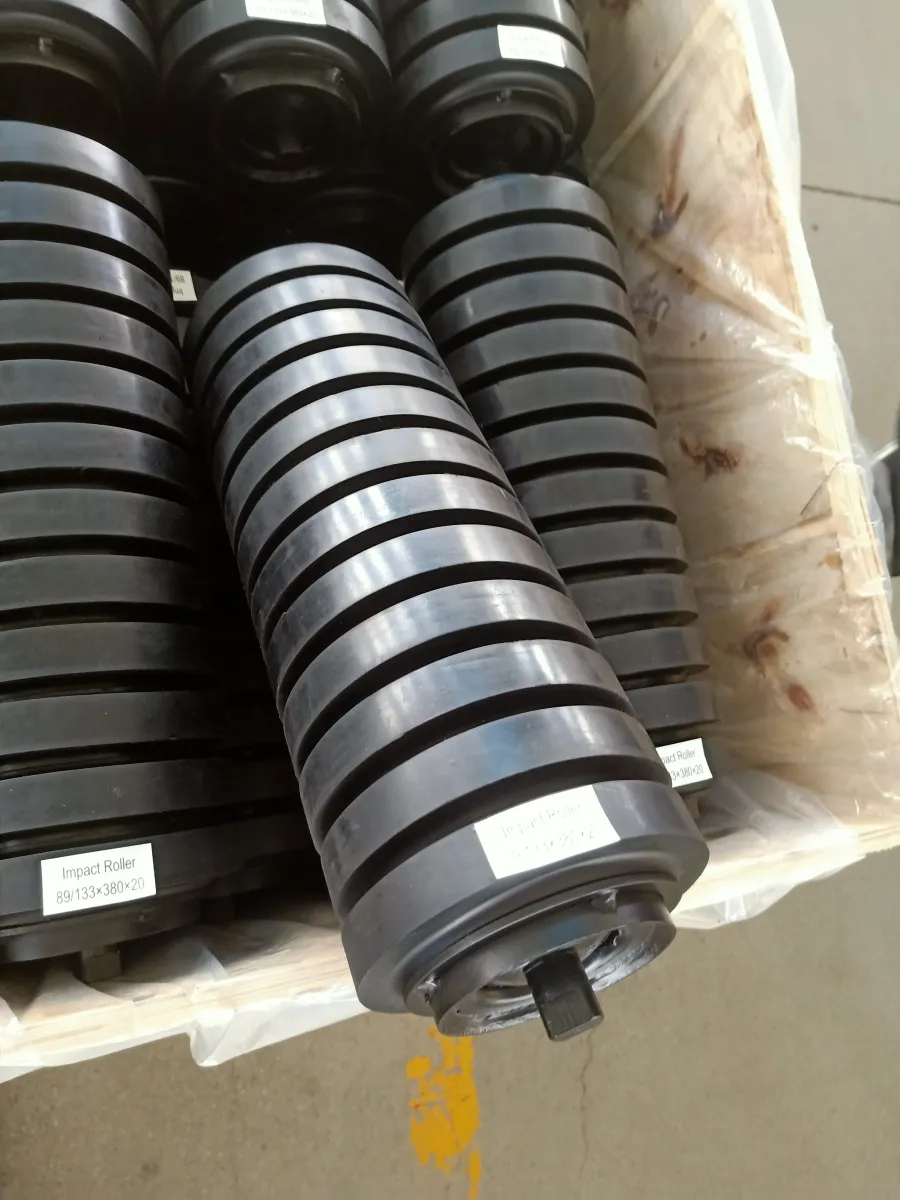
Rings and shaft-end detail
Confirm ring outside diameter, face length, shaft dimensions and end configuration. Labels on these photographed items are not a specification for every idler.
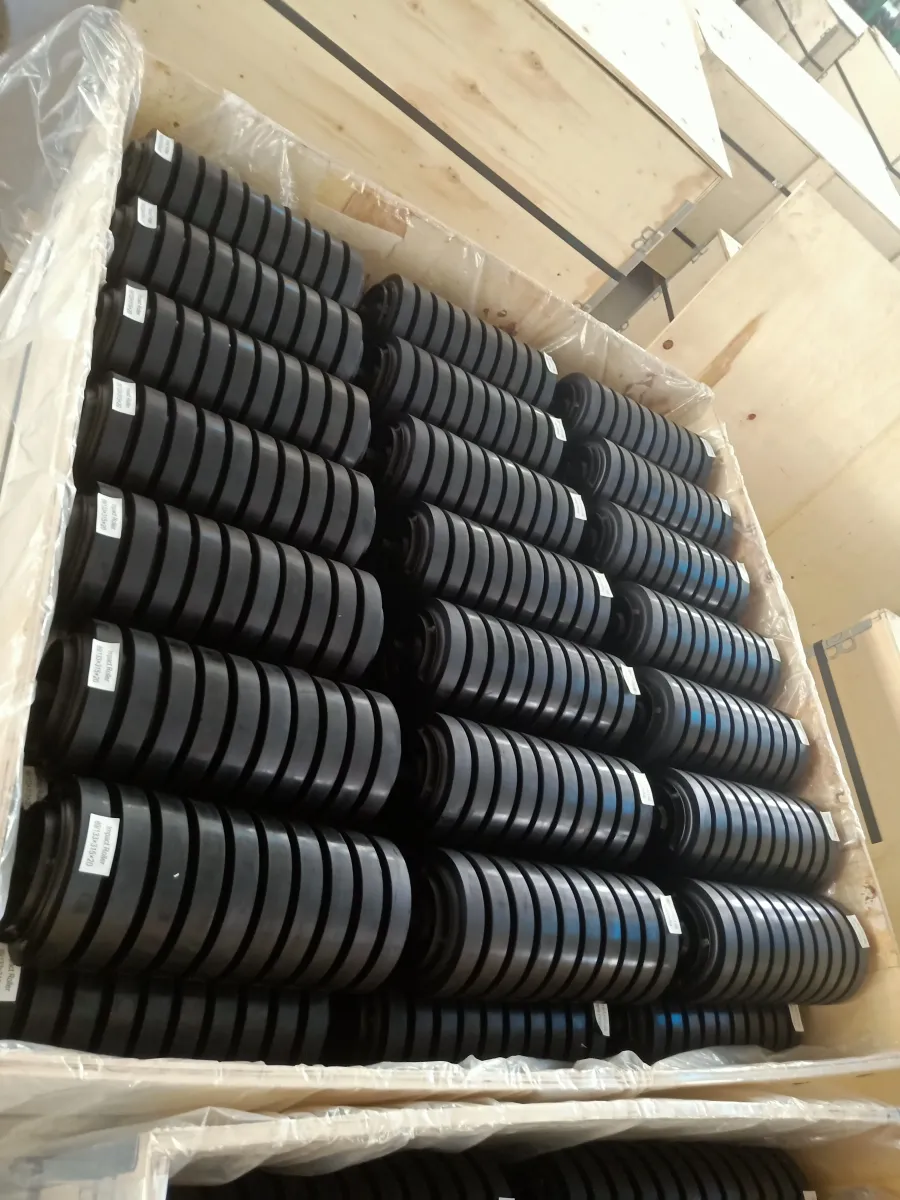
Quantity and packing requirements
State quantity, replacement drawing and required identification or inspection documents. Related views do not establish separate customer projects or a service-life result.
How to Read an Impact Idler Specification
An impact idler is a carrying idler wrapped in rings of polyurethane or rubber, fitted only where material falls onto the belt. Its job is to absorb energy that would otherwise reach the carcass. A typical spec reads Ø 133 · L 465 · CEMA C · 4G305 bearing · M16 shaft thread. The example is for reading a specification, not a confirmed product model or available size range. The quoted construction, current test criteria and supporting documents require supplier confirmation.
- Ø 133
- Roller diameter over the ringsCommon sizes are 89, 108, 133 and 159 mm. On an impact idler this is the diameter over the buffer rings, not the steel tube beneath — worth confirming in a quote, because two rollers with the same tube can have very different finished diameters.
- L 465
- Roller lengthFrom 200 to 530 mm depending on belt width and trough angle. A three-roll trough set divides the belt width between the centre and wing rollers, so roller length follows from belt width and trough angle together, not from belt width alone.
- CEMA C
- CEMA idler classThe load rating class — B, C, D, E and so on — that fixes the roller's permissible load. Impact duty pushes the class up: the same belt width and tonnage that would take a standard class on the carrying run may need a heavier class where lump is falling on it.
- 4G305
- Bearing modelFrom 4G204 up to 4G308 depending on roller size and duty. The bearing carries the shock load transmitted through the rings, so it is sized from impact rather than from the steady rolling load.
- M16
- Shaft threadM12 or M16, matched to the frame and bracket. A detail worth confirming against your existing garland or frame before ordering replacements, since a thread mismatch strands otherwise correct rollers.
Impact idlers protect the belt carcass, and the carcass rating on your belt spec sheet quietly assumes that protection exists. A correctly selected belt still fails early at an unprotected loading point — which is why impact protection belongs in the belt decision, not in a separate accessories line at the end of the RFQ.
Impact Idler Selection Guide
Impact idler selection starts somewhere unexpected: with the chute. Absorbing impact is the second-best answer, and it is worth confirming you have already taken the first.
Reduce the impact before you try to absorb it
Impact energy grows with drop height and lump mass. A chute that lowers the drop, centres the load and starts material moving in the belt's direction does far more for belt life than any idler can. Impact idlers handle what remains after the chute is right — they are not a substitute for a badly designed transfer.
Characterise the material that lands on the belt
The load is governed by lump size, bulk density and drop height, not by tonnage alone. A line moving modest tonnage of large, dense lump imposes far harsher impact than one moving high tonnage of fines. Establish the dominant and maximum lump sizes before choosing a class.
Look up bulk material propertiesSet the CEMA class from belt width, density and lump
Idler class fixes the permissible load per roller. Select it from belt width, material density and lump size, then treat impact duty as a reason to move up rather than down within the range. The load zone is where under-classing shows up first.
Select the CEMA idler classSpace them closer than the carrying idlers
Impact idlers are set at a tighter pitch than the standard carrying idlers along the rest of the conveyor, so the belt is supported continuously through the zone where material is landing. Standard carrying pitch through a load zone lets the belt deflect between rollers under each impact, which is precisely the loading the idlers were bought to prevent.
Fit them across the loading zone only
Impact idlers cost more than standard carrying idlers and their rings are a wear item. Fit them from where material first contacts the belt to where it has settled and is travelling at belt speed, then return to standard carrying idlers. Running them along the whole conveyor spends money where nothing is falling.
Common Specification Mistakes
Four errors that recur on impact idler enquiries. The first two are about where the real problem lies; the last two are sizing and scope.
Buying impact idlers instead of fixing the transfer chute
Impact energy scales with drop height and lump mass. A chute that lowers the drop, centres the load and accelerates material in the belt's direction removes more damaging energy than any cushioning ring absorbs. Impact idlers are the second line of defence. Fitting them to compensate for a bad transfer treats the symptom and keeps paying for rings.
Using standard carrying idler spacing through the load zone
At normal carrying pitch, the belt deflects between rollers under every falling lump — which is the exact loading the impact idlers were bought to prevent. The tighter pitch through the loading zone is not a refinement, it is the point. Correct rollers at the wrong spacing protect much less than the specification suggests.
Selecting the class from belt width and tonnage alone
Impact load is governed by lump size, bulk density and drop height. A modest tonnage of large dense lump is far harsher than a high tonnage of fines at the same belt width. Choosing a class from width and t/h without the lump and drop data under-specifies exactly the rollers that are least forgiving of it.
Fitting impact idlers along the whole conveyor
They cost more than standard carrying idlers and their rings wear. Outside the zone where material lands, that extra cost and that wear item buy nothing. Fit them across the loading and transfer zones, then return to standard carrying idlers for the rest of the run.
FREQUENTLY ASKED QUESTIONS
Are the listed options confirmed for every configuration?
No. Submit the dimensions, interfaces, duty and document requirements for your item. The supplier confirms the available configuration and any deviations in the quotation. Examples in the specification guide explain terminology; they are not a verified supply range or test certificate.
What does an impact idler actually do?
It absorbs the energy of material falling onto the belt so that energy does not reach the carcass. The rings of polyurethane or rubber deflect under the blow and spread it over a longer time and a wider area, which is what reduces the peak stress the belt sees. The steel tube and bearing underneath still carry the load; the rings change how the load arrives.
Where should impact idlers be fitted?
Only through the loading and transfer zones — from where material first contacts the belt to where it has settled and is moving at belt speed. Beyond that, standard carrying idlers do the job for less money. Fitting impact idlers along the whole conveyor is a common and expensive habit that buys nothing outside the zone where material is actually falling.
How closely should impact idlers be spaced?
Closer than the standard carrying idlers used along the rest of the conveyor. The aim is continuous support through the load zone so the belt cannot deflect between rollers as each lump lands. Using standard carrying pitch through a loading zone allows exactly the deflection that impact idlers were bought to prevent, so the tighter pitch is not an optional refinement.
Do impact idlers make up for a badly designed chute?
No, and this is the most useful thing to know about them. Impact energy rises with drop height and lump mass, so a chute that reduces the drop, centres the load and starts material moving with the belt removes far more damaging energy than any idler can absorb. Fix the transfer first; specify impact idlers to handle what is left.
Impact idlers or an impact bed — which is better?
They solve the same problem differently. Impact idlers are rotating rollers with cushioning rings; an impact bed uses fixed slider bars beneath the belt. Beds give continuous support with no gaps and suit sealed skirted loading zones, at the cost of sliding friction against the belt. Idlers roll with the belt and are simpler to retrofit. Neither is universally right — the sealing requirement and the belt speed usually decide it.
When do the buffer rings need replacing?
The rings are the wear item; the tube and bearing are meant to outlast them. Replace when the rings have worn, hardened or split enough that the roller no longer deflects under impact, because at that point you have an ordinary steel roller in the loading zone and the belt is taking the full blow. Inspect the load zone rings on the same cycle as your belt cover inspections.
Free tools for sizing this product
Run the numbers before you send an RFQ — no signup, no email.
Download the HEAVY-DUTY IMPACT IDLER inquiry guide
Specification inputs and procurement questions for supplier review. This website guide is not a supplier-approved datasheet, certificate or performance guarantee.
PDF · A4 · English