SELF-ALIGNING IDLER
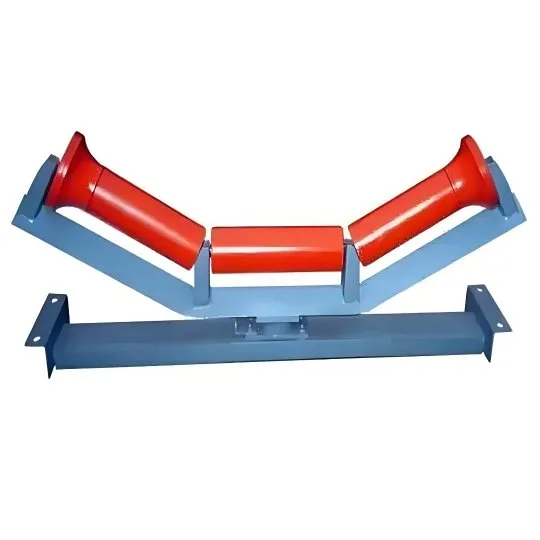
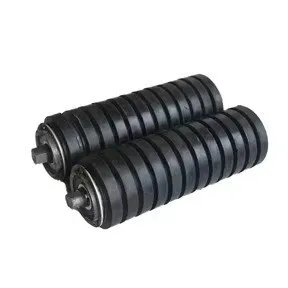
SELF-ALIGNING CONVEYOR IDLER
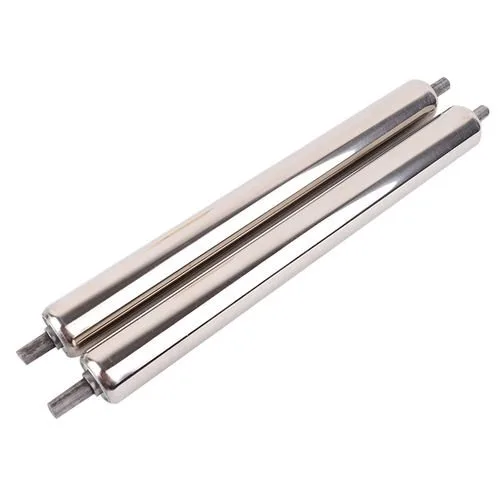
The self-aligning idler is designed to automatically correct belt misalignment during conveyor operation. By responding to belt deviation, the idler rotates or pivots to guide the belt back to the centerline — ensuring stable tracking and smooth operation without manual intervention.
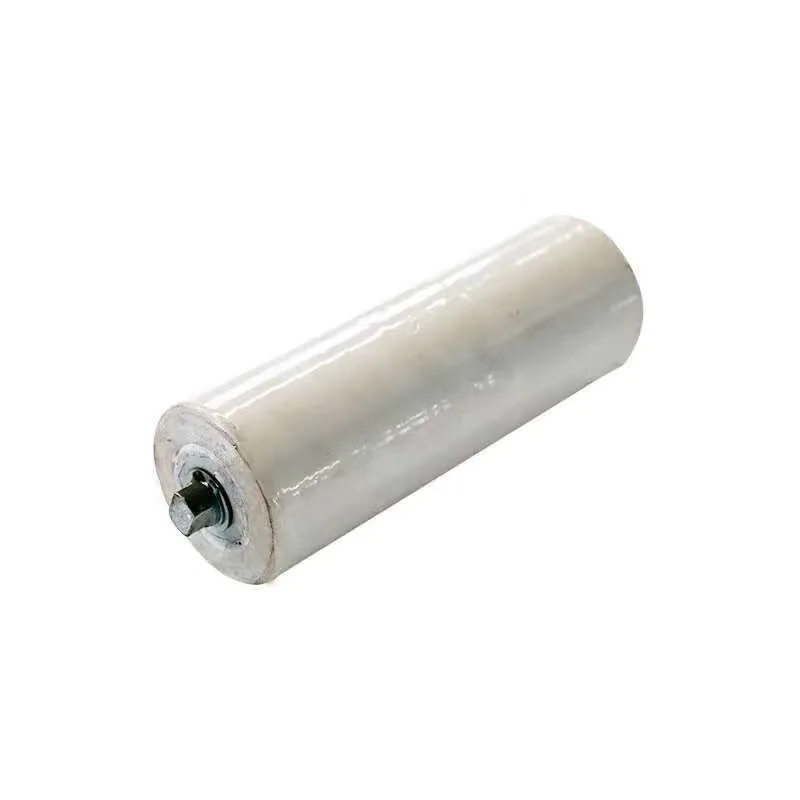
Self-aligning idlers significantly reduce belt edge damage, material spillage, and conveyor downtime caused by belt misalignment. They are commonly installed on the carrying side or return side of belt conveyors, especially in long-distance or heavy-load conveying systems where belt tracking stability is critical. BisonConvey self-aligning idlers feature a robust steel bracket with smooth pivoting rollers and low-maintenance sealed bearings.
Read the conveyor idler types and selection guide. It explains where self-aligning idlers belong in a root-cause-first tracking plan.
- Drawing-based inquiries
- Options confirmed per quotation
- Document requests welcome
TECHNICAL DATA
WHY CHOOSE THIS PRODUCT
- Automatically corrects belt deviation without manual adjustment
- Prevents belt edge damage and extends belt service life
- Minimizes material spillage from misaligned belts
- Improves conveyor stability in long-distance systems
- Reduces manual maintenance intervention and downtime
- Smooth pivoting structure for responsive correction
- Enhanced overall system reliability and safety
APPLICATIONS
How to Read a Self-Aligning Idler Specification
A self-aligning idler is a carrying or return idler mounted on a frame that pivots about a vertical axis. When the belt wanders off centre, the frame swivels, the roller axis skews, and the skewed roller steers the belt back. A typical spec reads B 1200 · 35° trough · carrying side · friction pivot · sealed bearings.
- B 1200
- Belt widthFrom 500 to 2400 mm. The self-aligner has to match the belt and the frame it replaces, since it is fitted in place of a standard idler set rather than added between sets.
- 35°
- Trough angleThe roller configuration must match the sets either side of it — a troughed self-aligner on a 35° line, or a flat unit on the return strand. A self-aligner at a different trough angle from its neighbours creates the very belt disturbance it is meant to remove.
- Carrying
- Installation sideCarrying side or return side. Return-strand mistracking is common and the return is easier to access, so return-side units are frequently the first fitted. Carrying-side units act on the loaded belt, where the steering forces are larger.
- Friction pivot
- Pivot mechanismHow the frame is made to swivel — commonly a friction-type self-adjusting pivot, sometimes with guide rollers at the belt edges. The mechanism determines how responsive the correction is and whether the unit works in one direction of travel or both.
- Sealed
- Bearing typeSealed bearings, as on any idler. The pivot itself is the additional maintenance point compared with a standard idler: it has to stay free to swivel, and a seized pivot silently turns the unit into an ordinary idler set.
Most friction-pivot self-aligners are direction-sensitive. Run the belt the other way and the same geometry that steers it back to centre will steer it off. If your conveyor reverses, say so in the enquiry and specify a unit designed for reversible duty — this is the detail most often missed.
Self-Aligning Idler Selection Guide
Self-aligning idlers correct what is left after the conveyor is right. They are genuinely useful, and they are also the most common way of paying repeatedly to avoid fixing a root cause. Step 1 matters more than the rest.
Find the root cause before adding correction
Persistent mistracking has causes: frame or idler sets out of square, structure that has settled, off-centre loading at the chute, material built up on a pulley or idler face, or a splice that is not square to the belt. Every one of those is fixable and none of them are cured by a self-aligner. Diagnose first — a self-aligner fitted over an unfixed root cause fights it continuously and wears out doing so.
Check belt sag and idler spacing as part of that diagnosis
Excessive sag between idler sets makes the belt unstable and contributes to both spillage and wandering. If the sag is out of range, correct the tension or the idler pitch before deciding you have a tracking problem that needs hardware.
Check belt sagDecide carrying side, return side, or both
Return-strand mistracking is very common and the return is easier to reach, so return-side units are often fitted first. Carrying-side units work on the loaded belt where steering forces are larger, and are the right answer where the loaded run is what wanders. Many long conveyors end up with both.
Confirm direction of travel, and whether it reverses
A friction-pivot self-aligner is generally built for one direction of belt travel. On a reversible conveyor a standard unit will steer the belt off centre when running the other way, which is worse than fitting nothing. Reversible duty needs a unit designed for it — state this in the enquiry rather than assuming.
Match the class and trough angle to the neighbouring sets
A self-aligner is still a carrying idler and carries load like one, so select its class from belt width, material density and lump size as you would any idler set. Its trough angle must match the sets either side, or the unit itself becomes a disturbance in the belt line.
Select the CEMA idler class
Common Specification Mistakes
Four errors that recur on self-aligning idler enquiries. The first is by far the most expensive because it never stops costing money.
Fitting self-aligners instead of finding the root cause
Mistracking traces to alignment, structure, loading, buildup or a skewed splice far more often than it traces to a missing self-aligner. Fitted over an unfixed cause, a self-aligner fights it every revolution and wears out doing so, and the fault is still there when the unit is replaced. Diagnose first; use self-aligners for the residual wander that remains after the conveyor is right.
Ignoring direction of travel on a reversible conveyor
A standard friction-pivot unit is built for one direction. Run the belt the other way and the same geometry steers it off centre rather than back — actively worse than fitting nothing. Reversible conveyors need units designed for reversible duty. State the reversing requirement in the enquiry; it is not something a supplier can infer from a belt width.
Mismatching the trough angle to the neighbouring sets
A self-aligner sits in the line of standard idler sets and must present the belt the same trough profile they do. A unit at a different trough angle from its neighbours introduces a step in the belt line — a disturbance of exactly the kind it was bought to remove.
Forgetting the pivot is a maintenance point
A standard idler has bearings to check. A self-aligner has bearings and a pivot, and the pivot has to stay free to swivel. Seized with dust, rust or packed fines, it silently reverts to an ordinary idler set while the maintenance record still says tracking correction is fitted. Put pivot freedom on the inspection list.
FREQUENTLY ASKED QUESTIONS
How does a self-aligning idler actually work?
The idler frame is mounted so it can pivot about a vertical axis. When the belt runs off centre it acts on the pivot mechanism — through friction against the rollers, or through guide rollers at the belt edge — and the frame swivels. That skews the roller axis relative to the belt, and a skewed roller steers the belt back towards the centreline. The correction is continuous and self-cancelling: as the belt returns to centre, the steering effect falls away.
Will self-aligning idlers fix a chronically mistracking conveyor?
Not if the cause is structural. Mistracking usually traces to a frame out of square, a settled structure, off-centre loading, buildup on a pulley or idler face, or a splice that is not square to the belt. A self-aligner fitted over any of those fights the cause continuously and wears out doing so, while the underlying fault stays. Diagnose and correct first, then use self-aligners for the residual wander that remains.
Carrying side or return side — where should they go?
Both are used. Return-strand mistracking is common and the return is easier to access, so return-side units are often fitted first and solve a lot of everyday problems. Carrying-side units act on the loaded belt, where the forces available to steer it are larger, and are the right choice when it is the loaded run that wanders. Long conveyors frequently end up with units on both strands.
Do self-aligning idlers work on a reversible conveyor?
Standard friction-pivot units generally do not. They are built around one direction of belt travel, and running the belt the other way makes the same geometry steer the belt off centre instead of back — worse than having nothing fitted. If your conveyor reverses, specify a unit designed for reversible duty and state the requirement clearly in the enquiry.
How many should I fit, and where?
They are fitted periodically along the conveyor rather than replacing every set, and they need a length of free belt to act on — so not immediately at a pulley or right at the loading point, where the belt is constrained or is still being loaded. Place the first one a reasonable distance after the load zone and space the rest along the run, denser on long conveyors where small deviations have room to grow.
What maintenance does a self-aligner need?
The same sealed bearings as any idler, plus one thing a standard idler does not have: the pivot must stay free. A pivot that has seized with dust, rust or packed material stops swiveling, and the unit quietly becomes an ordinary idler set while everyone assumes tracking correction is still in place. Include pivot freedom in the inspection round rather than only checking the rollers.
Free tools for sizing this product
Run the numbers before you send an RFQ — no signup, no email.
Download the SELF-ALIGNING CONVEYOR IDLER spec sheet
Full specifications, cover grades, tensile classes, and application recommendations — one PDF to share with your engineering team or procurement.
PDF · A4 · English