PIPE CONVEYOR BELTS
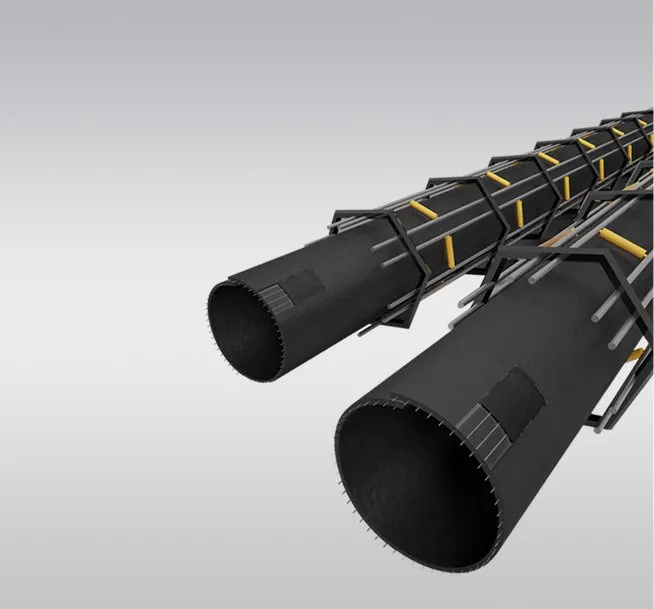

TUBULAR PIPE CONVEYOR BELTS
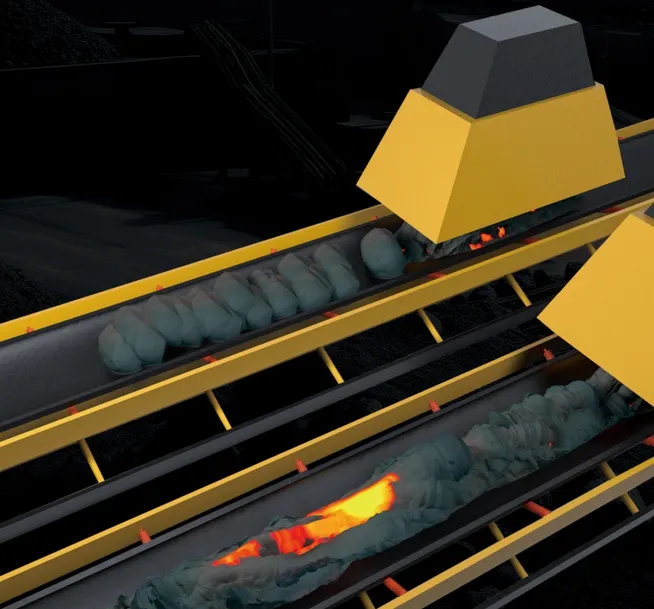
BisonConvey pipe conveyor belts are designed for efficient enclosed transportation of bulk materials. The belt curls into a tube shape along the conveying path, creating a sealed environment that prevents dust emissions, material spillage, and external contamination — ideal for environmentally sensitive sites and hazardous material handling.
Pipe belts handle steep inclines up to 30° and navigate curved paths in both horizontal and vertical planes, eliminating transfer points in complex layouts. Available in polyester, nylon, or steel cord carcass constructions with customizable pipe diameter up to 1500mm and belt widths up to 3150mm — the ideal solution for space-constrained or environmentally sensitive bulk handling projects.
- Drawing-based inquiries
- Options confirmed per quotation
- Document requests welcome
TECHNICAL DATA
WHY CHOOSE THIS PRODUCT
- Fully enclosed design prevents dust emissions and material leakage
- Steep incline capability up to 30° reduces footprint vs troughed belts
- Curved path conveying eliminates multiple transfer points
- Environmentally friendly — no spillage in sensitive areas
- Reduces overall maintenance via enclosed, self-cleaning design
- Enhanced safety preventing airborne dust and material loss
- Customizable pipe diameter, width, and carcass for each project
APPLICATIONS
How to Read a Pipe Conveyor Belt Specification
A pipe conveyor belt is a flat belt that is forced into a tube by a hexagonal ring of idler rolls, overlapping along its own edge to seal the material inside. The two numbers that define it — pipe diameter and flat belt width — are linked by geometry, and getting that link wrong is the classic pipe-belt error. A typical spec reads D 250 · W 950 · 75% fill · 30° · EP.
- D 250
- Pipe diameter (formed)The diameter of the tube once the belt is curled closed. This is what sets the cross-sectional area available for material and therefore the capacity. It also sets the minimum curve radius the route can hold — a larger pipe is stiffer and needs gentler curves.
- W 950
- Flat belt widthThe width of the belt laid flat, before forming. It is roughly π times the pipe diameter plus the overlap — for a 250 mm pipe, about 950 mm of flat belt. You order and splice the flat width; the pipe diameter is what it becomes in service.
- 75%
- Fill ratioThe fraction of the pipe cross-section the material actually occupies, kept around 75%. The remaining space lets material settle without fouling the overlap. Sizing a pipe belt to 100% fill is a design error — there must be headroom above the load.
- 30°
- Maximum incline angleBecause the material is enclosed in a tube, a pipe belt climbs steeper than a troughed belt — up to about 30° — without rollback or spillage. This is one of the two main reasons to choose the design; the other is dust containment.
- EP
- Carcass typeFabric (EP), nylon or steel cord, sized from tension as on any belt. The pipe-forming duty adds a requirement the flat-belt world does not have: the carcass must be stiff enough transversely to hold the tube shape, yet flexible enough to form it and to negotiate curves.
The pipe diameter and the flat belt width are not free choices — they are tied by the tube geometry. Quote and design around the pipe diameter for capacity and curve radius, but remember you order, splice and store the belt at its much larger flat width.
Pipe Conveyor Belt Selection Guide
A pipe belt is chosen for two things a troughed belt cannot give: full dust and spillage containment, and tight three-dimensional routing with steep climbs. It costs more and is less forgiving to design, so size it carefully.
Confirm you need enclosure or tight routing
The pipe belt earns its premium in two cases: when the material must be fully enclosed — dust, environmental, or contamination-sensitive duty — or when the route needs horizontal and vertical curves and steep climbs that a troughed belt cannot follow. If you need neither, a troughed belt is cheaper and simpler.
Size the pipe diameter from volume at 75% fill
Work out the volumetric flow you need, then size the pipe so the material fills only about three-quarters of its cross-section at belt speed. The headroom above the load is not waste — it is what keeps the material off the overlap and lets the tube seal. Sizing to full cross-section overstates the usable capacity.
Calculate required capacityDerive the flat belt width from the pipe diameter
The flat width follows from the pipe circumference plus the overlap — roughly three times the pipe diameter. This is the width you actually order, splice and handle. Confirm it against your belt-forming idler panels and your splice press capacity before committing.
Check the minimum curve radius the route demands
Pipe belts negotiate horizontal and vertical curves, but only down to a minimum radius set by the pipe diameter and belt stiffness — a larger pipe needs a larger radius. Establish the minimum radius with the supplier and confirm every curve in your route respects it before the layout is fixed.
Size the carcass and check pulleys for the formed pipe
Calculate tension and choose the carcass as on any belt, but confirm the carcass has the transverse stiffness to hold the pipe shape and the flexibility to form it. Then check pulley diameters — the belt must open flat at the pulleys and re-form into a pipe after them without distress.
Calculate belt tension
Common Specification Mistakes
Four errors that recur on pipe conveyor enquiries. The first two distort the sizing; the second two surface once the belt is running.
Confusing pipe diameter with flat belt width
The two are linked but very different numbers — the flat width is about three times the pipe diameter. Quoting or ordering against the wrong one leads to a belt that will not form the intended pipe or will not fit the idler panels. Always state clearly whether a figure is the formed pipe diameter or the flat belt width.
Sizing capacity to full cross-section
A pipe belt is designed to run around 75% full so the material stays clear of the overlap. Calculating capacity on the full pipe cross-section overstates throughput by a third and produces a pipe that fouls its own seal in service. Always size at the design fill ratio, not the geometric maximum.
Fixing the route before checking minimum curve radius
Pipe belts curve in three dimensions, but only down to a minimum radius set by the pipe diameter. Routes drawn to fit a site and then sent for quotation sometimes demand curves tighter than the chosen pipe can hold. Establish the radius limit first and design the route inside it.
Ignoring the transition zones at pulleys
The belt has to open from a pipe to flat at each pulley and re-form into a pipe afterwards, over a transition length that must be respected. Cramming the transitions or specifying pulleys that are too small stresses the carcass where it opens and closes, and the belt fails at the transitions rather than in the pipe run.
FREQUENTLY ASKED QUESTIONS
How is the flat belt width related to the pipe diameter?
The flat width is approximately the pipe circumference plus the overlap — very roughly three times the pipe diameter. A 250 mm formed pipe needs about 950 mm of flat belt. You order, splice and store the belt at its flat width; the pipe diameter is what it forms into once the idler panels curl it closed. Always be clear which of the two figures a quote refers to.
Why is a pipe belt only filled to about 75%?
The material must sit in the bottom of the tube with clear space above it, so it does not reach the overlap where the belt edges seal. That headroom also absorbs surges and lets the material settle as the belt flexes through curves. Designing to 100% fill leaves no margin and risks fouling the overlap, so capacity is always calculated at around three-quarters fill.
How steep can a pipe conveyor climb?
Up to around 30°, noticeably steeper than a troughed belt, because the material is enclosed in the tube and cannot roll back or spill. Combined with the ability to follow horizontal and vertical curves, this is what lets a single pipe conveyor replace a chain of troughed conveyors with transfer towers between them.
What are the main advantages over a troughed belt?
Two: total containment and routing freedom. The closed tube stops dust emission and spillage completely, which matters for environmentally sensitive or contamination-sensitive material. And the belt can curve in three dimensions and climb steeply, so one pipe conveyor can follow a path that would otherwise need several troughed conveyors and the transfer points between them.
What limits the routing curves a pipe belt can follow?
The minimum curve radius, which is set by the pipe diameter and the belt's stiffness — a larger, stiffer pipe needs a larger radius. Within that limit the belt follows horizontal and vertical curves freely. Establish the minimum radius with the supplier for your chosen pipe diameter and check every curve in the route against it before fixing the geometry.
Does a pipe belt need special idlers?
Yes. The tube is formed and held by hexagonal panels of six idler rolls spaced along the conveyor, rather than the three-roll troughing sets of a conventional belt. The belt opens flat at the pulleys and is re-formed into the pipe by the first panels after them. This idler arrangement is part of the system cost and must be designed with the belt.
Free tools for sizing this product
Run the numbers before you send an RFQ — no signup, no email.
Download the TUBULAR PIPE CONVEYOR BELTS spec sheet
Full specifications, cover grades, tensile classes, and application recommendations — one PDF to share with your engineering team or procurement.
PDF · A4 · English