HEAT RESISTANT CONVEYOR BELTS
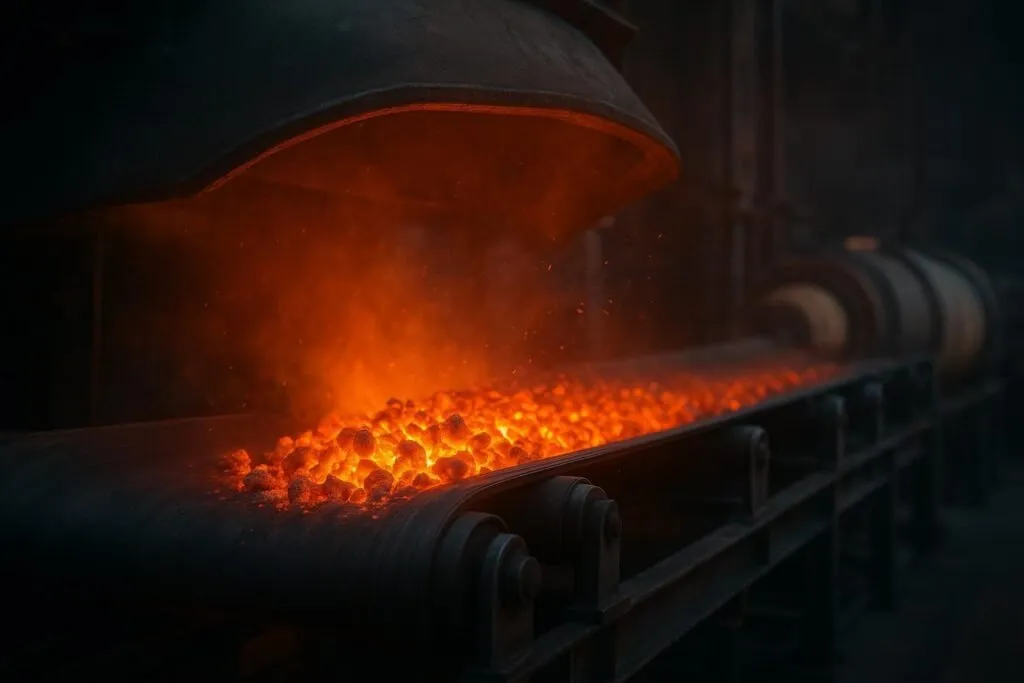
HEAT RESISTANT CONVEYOR BELTS (T1/T2/T3/T4)
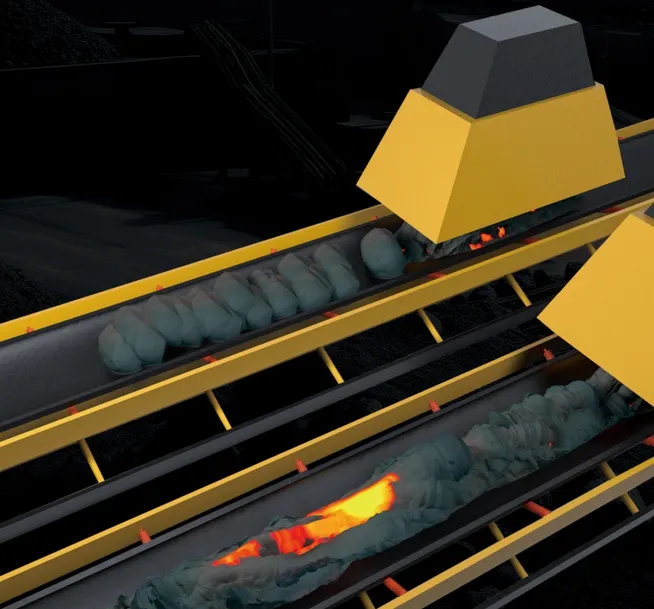
BisonConvey heat resistant conveyor belts are engineered for conveying high-temperature materials through special impregnation and shaping treatment of the belt carcass, achieving high bonding strength, excellent heat shock resistance, and stable mechanical performance. They maintain low elongation and outstanding wear resistance under continuous operating conditions with material temperatures up to 180°C, and can withstand temperatures up to 250°C for short-term operations.
The rubber compound resists aging, cracking, and strength degradation caused by heat, extending service life and reducing maintenance costs. Available in four heat-resistance grades (T1 through T4) with progressively higher temperature tolerances — letting you match the belt specification to your kiln, sinter, clinker, or coke conveying environment.
- Drawing-based inquiries
- Options confirmed per quotation
- Document requests welcome
TECHNICAL DATA
WHY CHOOSE THIS PRODUCT
- Continuous service at material temperatures up to 180°C
- Short-term peak tolerance up to 250°C without delamination
- Four distinct heat-resistance grades (T1/T2/T3/T4) for precise fit
- High bonding strength resists heat-induced cover separation
- Low elongation under heat maintains consistent belt tracking
- Superior wear resistance extends service life vs standard rubber
- Reduced maintenance costs in hot, abrasive environments
APPLICATIONS
How to Read a Heat-Resistant Belt Specification
Heat-resistant belts are graded by the temperature they are tested at, not by a single number you can read off a datasheet. The grade, the continuous rating and the short-term peak are three different figures, and confusing them is the most expensive mistake on a hot conveyor. A typical spec reads T3 · 180°C continuous · 250°C peak · EPDM · 6/3 mm.
- T3
- Heat-resistance grade (T1-T4)The grade is defined by a laboratory test temperature: T1 ≤100°C, T2 ≤125°C, T3 ≤150°C, T4 ≤175°C. It describes how the cover compound behaves under a standardised heat-ageing test — it is not the material temperature the belt can carry in service.
- 180°C
- Continuous service temperatureThe material temperature the belt is designed to carry continuously, typically up to 180°C for the top grades. This is the number your process temperature must sit below, with margin.
- 250°C
- Short-term peak temperatureThe temperature the belt can survive briefly — up to 250°C — without the cover delaminating from the carcass. Peak is for excursions and lumps of hot clinker, not for steady running. Never size a belt so its continuous duty equals its peak rating.
- EPDM
- Cover compound familyHeat resistance comes from the cover polymer. EPDM and other specialised compounds resist heat ageing far better than standard SBR. The compound, not the carcass, is what makes a belt heat-resistant.
- 6/3 mm
- Cover thickness, top / bottomA thicker top cover is not only wear reserve on a hot belt — it also insulates the carcass from the heat above it. On hot abrasive duty the top cover is specified generously for both reasons.
The grade letter and the service temperature answer different questions. A T3 belt is tested at ≤150°C but is rated for continuous material temperatures up to 180°C because the belt surface runs cooler than the bulk material sitting on it. Always specify against the material temperature and the grade together, not one alone.
Heat-Resistant Belt Selection Guide
Selecting a heat-resistant belt is about matching the grade to the real thermal load — material temperature, contact time and radiant heat — then protecting the carcass. Work through these five steps in order.
Establish the true material temperature, not the nominal
Ask for the actual temperature of the material as it lands on the belt, including hot-spot excursions, not the average process figure. Clinker leaving a cooler, sinter, hot pellets and foundry sand all carry local hot spots well above their nominal temperature. Size the grade against the worst case the belt sees, not the mean.
Match the grade to continuous, then check the peak separately
Choose the grade so its continuous rating sits above your steady material temperature with margin, then confirm its short-term peak covers your worst excursion. A belt correctly graded for continuous duty can still fail if a peak event exceeds its peak rating. The two checks are independent.
Specify top cover thickness for insulation as well as wear
On a hot belt the top cover does double duty: it is the wear reserve and it is thermal insulation for the carcass beneath. Cement clinker and sinter are both hot and abrasive, so the top cover is specified generously. A thin cover on hot abrasive duty exposes the carcass to heat and wear at once.
Size the carcass from tension as usual
Heat resistance lives in the cover; the carcass is still sized from belt tension exactly as on any other fabric or steel cord belt. Calculate tension for the length, lift and tonnage, choose the carcass, then apply the heat-resistant cover grade on top of that decision.
Calculate belt tensionConfirm pulley diameters and allow for heat at the splice
Check the minimum pulley diameter for the chosen carcass. Then remember the splice: a vulcanized splice on a heat-resistant belt uses heat-resistant splice materials, and the joint must be built to the same grade as the belt or it becomes the weak point on a hot line.
Check minimum pulley diameter
Common Specification Mistakes
Four errors we see repeatedly on hot-conveyor enquiries. Each one shortens belt life on an application where a belt change is disruptive and expensive.
Specifying against the average temperature, not the hot spots
The nominal process temperature hides the excursions that actually kill the belt — a hot lump of clinker, a cooler upset, a localised hot spot. Grade the belt against the worst case it sees at the loading point, not the comfortable average, or the cover ages prematurely where the heat concentrates.
Confusing the grade letter with the service temperature
A T3 belt is heat-tested at ≤150°C but is rated for continuous material temperatures up to 180°C. Reading the grade test temperature as the service limit leads to over-specifying and overspending; reading the service limit as the grade leads to under-specifying and early failure. They are different numbers answering different questions.
Setting continuous duty equal to the peak rating
The short-term peak is survival headroom for brief excursions, not a steady operating point. A belt run continuously at its peak temperature delaminates in months. Always design the running condition against the continuous rating and keep the peak in reserve for the hot events.
Building the splice to a lower grade than the belt
A correctly graded heat-resistant belt with an ordinary splice fails at the splice. On a hot line the vulcanized joint must use heat-resistant splice materials matched to the belt grade. The splice is the one place a heat-resistant specification is most often quietly downgraded — and it becomes the failure point.
FREQUENTLY ASKED QUESTIONS
What do the T1, T2, T3 and T4 grades actually mean?
They are defined by a laboratory heat-ageing test temperature: T1 up to 100°C, T2 up to 125°C, T3 up to 150°C, T4 up to 175°C. The grade describes how the cover compound holds up under a standardised heat test. It is not the same as the material temperature the belt carries in service, which is generally higher because the belt surface runs cooler than the bulk material on it.
What temperature can a heat-resistant belt actually carry?
The top grades are designed for continuous material temperatures up to about 180°C, with short-term peaks up to 250°C for brief excursions such as a lump of hot clinker. The continuous figure is the one to design against; the peak is a survival limit, not a running condition.
What is the difference between continuous and peak temperature?
Continuous is the material temperature the belt can carry all day without degrading. Peak is a temperature it can survive briefly without the cover delaminating from the carcass. A belt whose continuous duty is set equal to its peak rating will fail early — always leave the peak as headroom for excursions, not as the operating point.
Why does the belt surface run cooler than the material?
Because the material sits on the belt only briefly before discharging, and the cover insulates the carcass from the heat above. This is why a belt graded at a ≤150°C test temperature can be rated for material temperatures up to 180°C. It is also why contact time and belt speed matter — a slow belt under hot material gets hotter than a fast one.
Does the carcass need to be heat-resistant, or just the cover?
Heat resistance is primarily a cover property — EPDM and specialised compounds resist heat ageing where standard SBR would harden and crack. The carcass is protected by the cover and by adequate top-cover thickness. That said, the carcass adhesion system and the splice must also be built to the heat grade, or the belt delaminates at the weakest bond.
Can I use a heat-resistant belt on a normal (cold) conveyor?
You can, but it is money wasted. Heat-resistant compounds cost more and are chosen for their thermal behaviour, not for cold-duty wear or cut resistance. On an ambient conveyor a standard abrasion-resistant belt is cheaper and often more suitable. Specify heat resistance only where the material temperature genuinely calls for it.
Free tools for sizing this product
Run the numbers before you send an RFQ — no signup, no email.
Download the HEAT RESISTANT CONVEYOR BELTS (T1/T2/T3/T4) spec sheet
Full specifications, cover grades, tensile classes, and application recommendations — one PDF to share with your engineering team or procurement.
PDF · A4 · English