SIDEWALL CONVEYOR BELTS
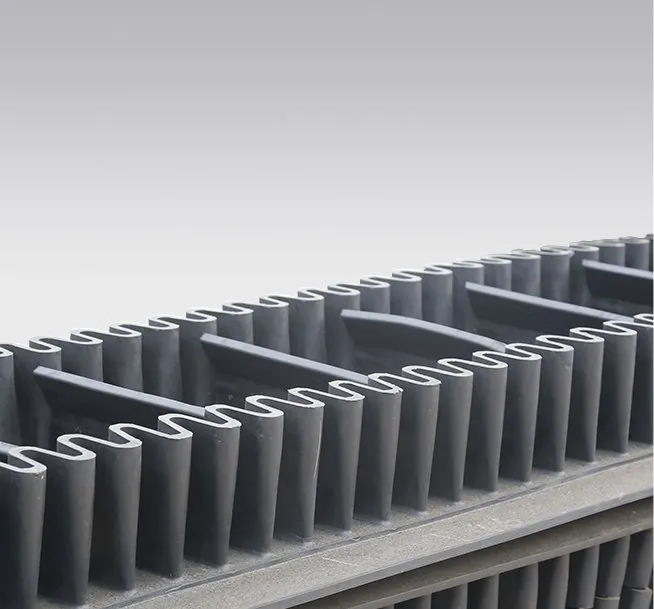
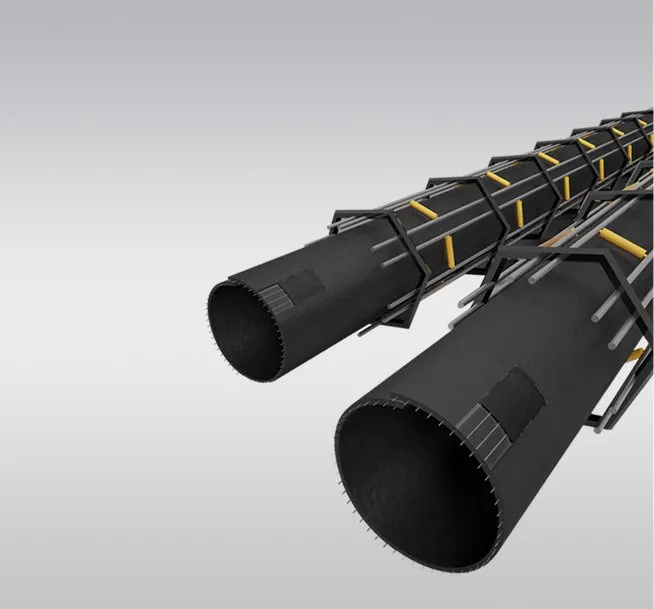
CORRUGATED SIDEWALL CONVEYOR BELTS
BisonConvey corrugated sidewall conveyor belts are designed for steep angle and vertical conveying applications where conventional flat belts cannot operate. Flexible corrugated sidewalls and transverse T-cleats are vulcanized onto the base belt, creating enclosed pockets that prevent material spillage at angles up to 90°.
These belts are the ideal solution for space-constrained installations where horizontal conveying distance is limited. They can navigate complex routing paths including inclines, declines, and horizontal runs in a single belt — eliminating multiple transfer points and reducing material degradation.
- ISO 9001:2015
- SGS Certified
- CE
- OHSAS 18001
- ISO 14001
- · 30+ Countries
- · Since 2005
TECHNICAL DATA
WHY CHOOSE THIS PRODUCT
- Conveying angles from 0° to 90° in a single belt system
- Flexible corrugated sidewalls maintain seal through curves and transitions
- T-cleat profiles create enclosed pockets preventing material spillage
- Eliminates multiple transfer points — reduces material degradation
- Available with heat-resistant compounds up to 150°C
- Custom sidewall and cleat configurations for specific material flow
APPLICATIONS
How to Read a Corrugated Sidewall Belt Specification
A corrugated sidewall belt is an assembly, not a single component: a flat base belt, flexible corrugated sidewalls vulcanized along both edges, and transverse cleats between them. Each part is specified separately. A typical spec reads B 800 · SW 160 · TC 160 · EW 500 · 0-90°.
- B 800
- Base belt widthThe width of the flat belt underneath, 400 mm to 2400 mm. This is the belt that carries all the tension — the sidewalls and cleats carry none. It is also the width your pulleys and idlers must suit.
- SW 160
- Sidewall heightHeight of the corrugated sidewall, 60 mm to 400 mm. Together with the effective width this sets the cross-sectional area available for material, and therefore the capacity.
- TC 160
- Cleat type and heightTransverse cleat profile — T, TC, C or S — and its height, 40 mm to 360 mm. The cleat divides the trough into pockets so material cannot avalanche back down at steep angles.
- EW 500
- Effective carrying widthThe clear width between the two corrugated sidewalls, 200 mm to 2000 mm. Always smaller than the base width. This — not the base width — is the number capacity is calculated from.
- 0-90°
- Conveying angle rangeA single belt can run horizontal, incline and vertical sections in one continuous path, which is the whole point of the design: it removes transfer points instead of chaining conveyors together.
The base-width / effective-width distinction is the single most misread field on a corrugated sidewall spec. A B 800 belt does not carry material across 800 mm — the sidewalls occupy the edges. Quote and calculate on effective width.
Corrugated Sidewall Belt Selection Guide
Sidewall belts solve a problem no other belt can: steep or vertical lift in a constrained footprint. They are also considerably more expensive than the alternatives, so step 1 matters as much as the rest.
Confirm the angle genuinely requires sidewalls
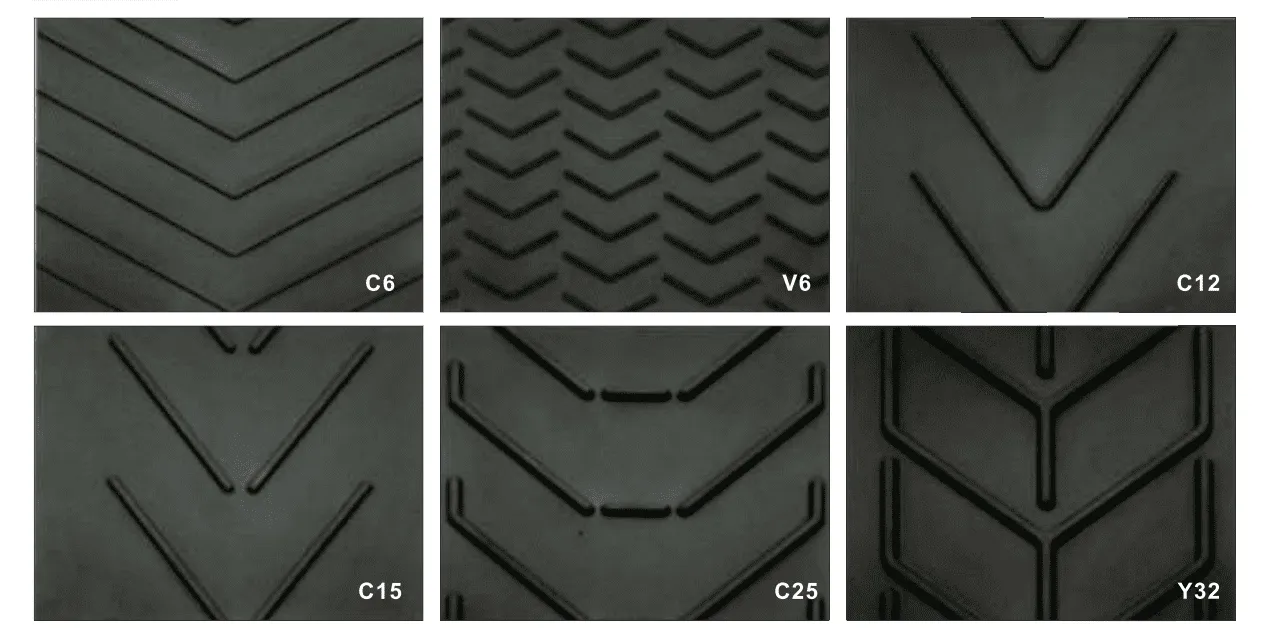
Below about 40°, a chevron cleated belt does the same job for materially less money and with simpler maintenance. Corrugated sidewall earns its cost in the 40-90° band, or where site footprint forces a near-vertical lift that no inclined conveyor could fit. If you are at 30°, specify chevron instead.
Check your required incline angleCalculate capacity from effective width, never base width
The corrugated sidewalls consume belt width at both edges. Capacity follows the pocket cross-section formed by the effective width, the sidewall height and the cleat spacing. Sizing on base width overstates throughput substantially and is the most common specification error on these belts.
Calculate conveyor capacitySet sidewall height from the required cross-section
Taller sidewalls carry more per metre but add belt mass, cost and stiffness. Work back from the throughput you actually need at the belt speed you can run, rather than defaulting to the tallest wall available. Bear in mind that a taller wall is also harder to route through tight curves.
Choose the cleat profile for the material and angle
T and TC profiles form the deepest pockets and hold material at the steepest angles. C and S profiles are gentler on the material and shed sticky product more readily. The steeper the run and the more free-flowing the material, the more cleat you need.
Check pulley diameters and minimum curve radius
A sidewall belt has geometric limits a flat belt does not: the corrugated wall must be able to flex around every pulley and transition without cracking. Confirm minimum pulley diameter for the base carcass and confirm the minimum concave and convex radii your routing needs before finalising the layout.
Check minimum pulley diameter
Common Specification Mistakes
Four errors that recur on corrugated sidewall enquiries. The first two are expensive at the quotation stage; the second two only surface once the belt is installed.
Calculating capacity on base width instead of effective width
The single most common error on these belts. Quoting throughput against a B 800 base width when the clear channel between the corrugated sidewalls is around 500 mm overstates capacity badly. Always calculate on the effective width, and state clearly in the RFQ which figure you are quoting.
Specifying sidewall where a chevron belt would do
Corrugated sidewall belts cost substantially more than chevron cleated belts and are more complex to splice and maintain. Below about 40°, chevron does the same job. Sidewall earns its price when the angle exceeds what cleats can hold, or when footprint forces a near-vertical lift — not as a general upgrade.
Fixing the conveyor geometry before checking minimum radii
A corrugated sidewall has to flex around every concave and convex transition. Layouts drawn to fit a building, then sent for quotation, sometimes turn out to demand radii tighter than the chosen sidewall height can survive. Establish the radius limits first and design the routing inside them.
Neglecting the feeding zone
Material must be placed into the pockets on a horizontal or gently inclined section, with skirting that suits the sidewall profile. Feeding directly onto a steep section, or using generic skirting that rubs the corrugated wall, causes spillage, accelerated wall wear and premature failure of an otherwise correctly specified belt.
FREQUENTLY ASKED QUESTIONS
Can a corrugated sidewall belt really convey vertically at 90°?
Yes. The corrugated sidewalls and transverse cleats form closed pockets that hold material against gravity, so true vertical lift is achievable. What it demands is a properly designed feeding zone — material has to be loaded into the pockets on the horizontal or low-incline section before the belt turns up, not dropped onto a belt that is already vertical.
Why is effective width smaller than base belt width?
Because the corrugated sidewalls are vulcanized onto the edges of the base belt and occupy that space. On a B 800 belt with 160 mm sidewalls, the clear channel between the walls might be around 500 mm. Material rides in that clear channel only, so all capacity calculations must use the effective width.
Sidewall or chevron — where is the dividing line?
Roughly 40°. Below it, a chevron cleated belt handles the duty for considerably less money and is simpler to clean and maintain. Above it, cleats alone cannot stop material avalanching back and you need enclosed pockets. Sidewall also wins whenever the site simply has no room for the horizontal run an inclined conveyor would need.
Can one belt run horizontal, then incline, then horizontal again?
Yes, and this is the main reason to choose the design. A single continuous belt can take a horizontal loading run, a steep or vertical lift, and a horizontal discharge run. That removes the transfer points a chained conveyor system would need — which removes the spillage, dust and material degradation that occur at every transfer.
What limits the routing — can it turn any corner?
No. The corrugated sidewall must flex around every curve without cracking, so there are minimum concave and convex radii for a given wall height. Taller sidewalls are stiffer and need larger radii. Establish these limits with the supplier before fixing the conveyor geometry, because a layout drawn without them may simply not be buildable.
How are sidewall belts spliced?
The base belt is vulcanized spliced conventionally. The sidewalls and cleats are then jointed separately across the splice so the corrugated wall stays continuous and the pockets are not broken at the joint. It is a more involved procedure than a flat belt splice and should be done by a crew experienced with sidewall construction.
Free tools for sizing this product
Run the numbers before you send an RFQ — no signup, no email.
Download the CORRUGATED SIDEWALL CONVEYOR BELTS spec sheet
Full specifications, cover grades, tensile classes, and application recommendations — one PDF to share with your engineering team or procurement.
PDF · A4 · English