CHEVRON CONVEYOR BELTS
CHEVRON PATTERNED CONVEYOR BELTS
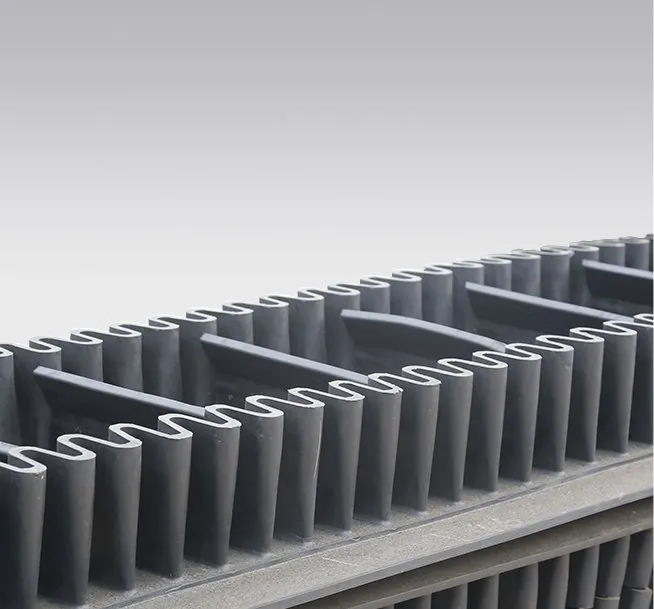
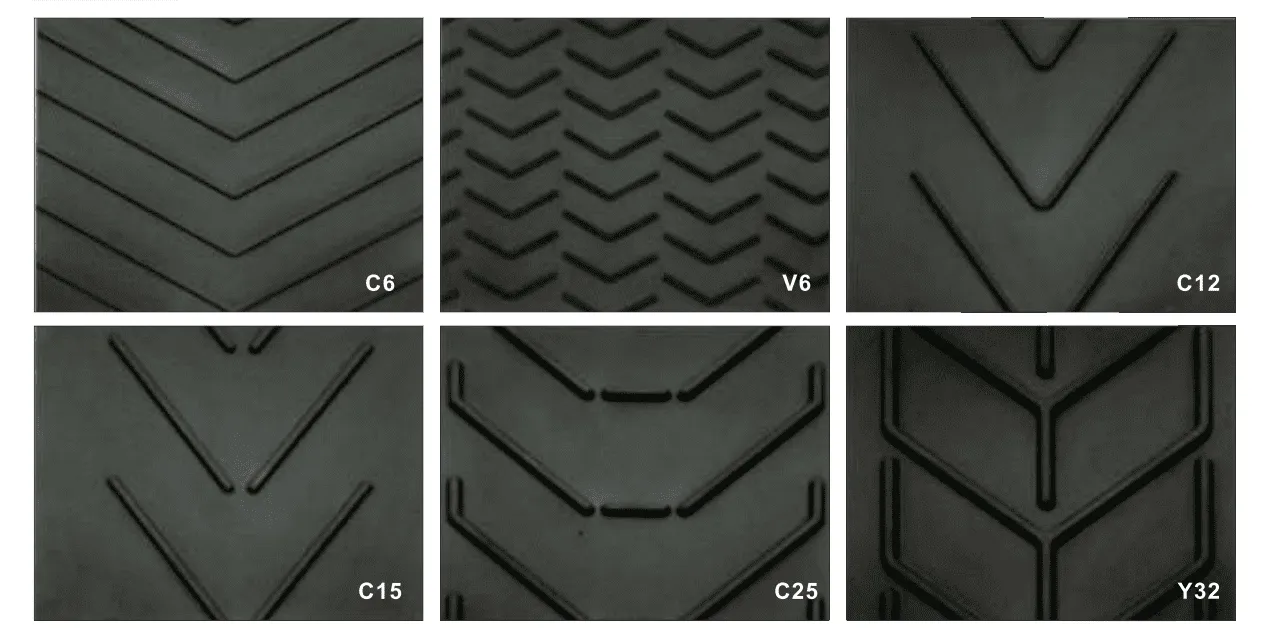
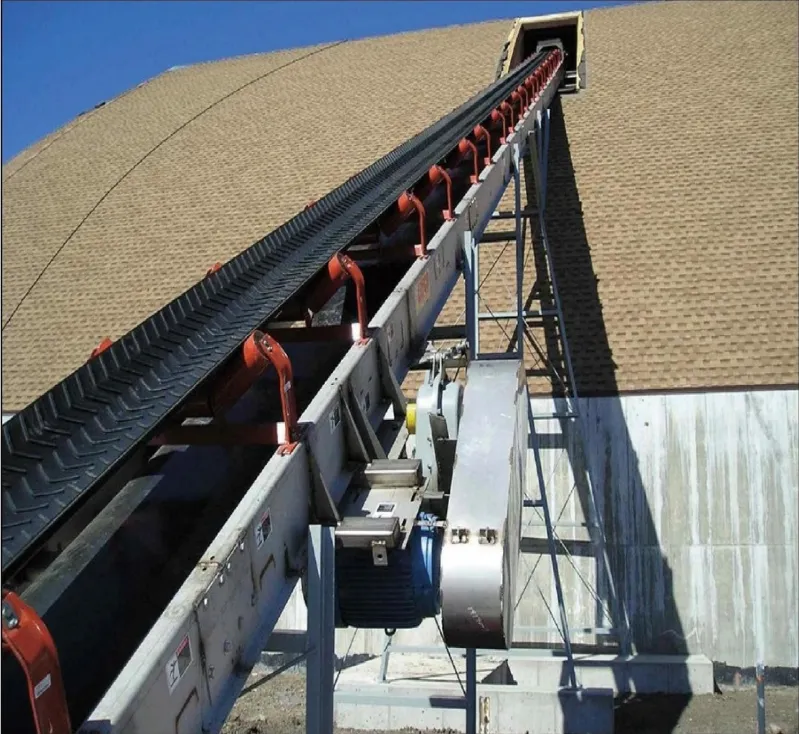
BisonConvey chevron conveyor belts feature molded rubber cleats (patterns) on the carrying surface that prevent material rollback during inclined conveying. Available in open V, closed V, Y-cleat, and herringbone profiles to suit different material types and inclination angles up to 40°.
The patterns are integrally vulcanized with the belt cover — not glued or bolted — ensuring maximum bonding strength and long service life even under continuous abrasive loading. Ideal for transporting aggregates, grains, sand, fertilizer, and wood chips on inclined systems.
- ISO 9001:2015
- SGS Certified
- CE
- OHSAS 18001
- ISO 14001
- · 30+ Countries
- · Since 2005
TECHNICAL DATA
WHY CHOOSE THIS PRODUCT
- Integral vulcanization ensures cleat-to-belt bond strength exceeds DIN standards
- Multiple pattern profiles match different material flow characteristics
- Effective incline conveying up to 40° without material spillage
- Available in abrasion-resistant and oil-resistant compounds
- Three cleat heights (15/25/32mm) for fine to coarse materials
- Compatible with standard belt conveyors — no special return idlers needed
APPLICATIONS
How to Read a Chevron Cleated Belt Specification
A chevron belt is a normal fabric belt with cleats moulded onto the top cover. That matters more than it sounds: the carcass rating and the cleat pattern are specified separately, and only the carcass carries tension. A typical spec reads EP 400/3 · 25 mm Closed V · 1000 mm · 4/2 mm.
- EP 400/3
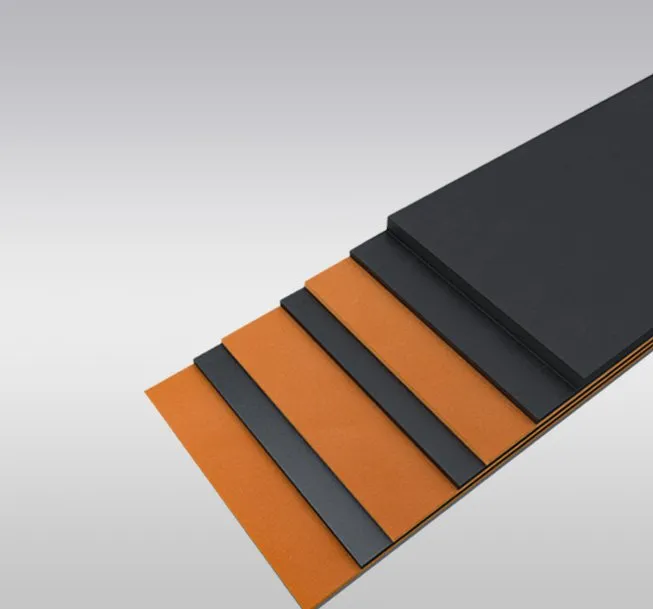
- Carcass rating and ply countExactly the same EP designation used on a plain fabric belt — 400 N/mm full-belt tensile strength across 3 plies. The cleats add no tensile strength whatsoever, so size this from your tension calculation as if the cleats were not there.
- 25 mm
- Cleat heightThe height of the moulded pattern above the top cover. Common heights are 15, 25 and 32 mm. Height is matched to material particle size and incline angle, not to belt width.
- Closed V
- Cleat patternOpen V, Closed V, Y-cleat or herringbone. The pattern governs how material is held and how well the belt sheds sticky residue on the return run.
- 1000 mm
- Belt widthStandard belt width, 500 mm to 2200 mm. Unlike a sidewall belt, the full width stays available for carrying — the cleats sit on the surface rather than enclosing it.
- 4/2 mm
- Cover thickness, top / bottomMeasured on the flat cover between cleats. The cleat height is additional to this figure, not included in it — a frequent source of quoting confusion.
Cleat height and pattern are not covered by a DIN or ISO designation the way carcass rating is — they are manufacturer-defined. Always confirm the exact profile geometry against a drawing rather than assuming two suppliers' '25 mm Closed V' are identical.
Chevron Belt Selection Guide
Chevron belts occupy a specific band: too steep for a flat belt, not steep enough to justify a sidewall belt. Work through these five steps in order — the first one disqualifies more projects than any other.
Confirm you actually need cleats
A plain flat belt handles most bulk materials up to roughly 18-20° before rollback begins, depending on the material's angle of repose. Chevron extends the usable range to about 40°. If your incline is under 18°, cleats are cost with no benefit — and they bring real drawbacks in cleaning and scraper compatibility.
Check your incline against the materialMatch cleat height to particle size
Cleat height must be sized against the material, not the angle alone. Fine, free-flowing material such as sand or grain is held well by 15 mm cleats. Coarse aggregate and lumpy material need 25 mm or 32 mm — a cleat shorter than the dominant lump does nothing to stop it rolling back.
Choose the pattern for your material's behaviour
Open V leaves a clear channel to the belt edge, so it sheds wet and sticky material and is the safer default for anything that packs. Closed V holds fine dry material more securely. Herringbone spreads the holding action across the width and suits higher throughput. Y-cleat sits between open and closed V.
Size the carcass from tension, ignoring the cleats
This is where chevron specs go wrong most often. Calculate belt tension exactly as you would for a flat belt of the same duty, then pick the EP carcass to suit. The cleats contribute nothing structurally; a heavier cleat does not let you drop a ply.
Calculate belt tensionCheck pulley diameters and return-side clearance
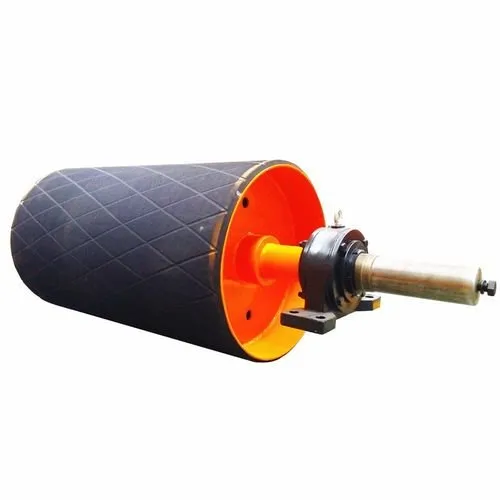
Cleats must fold cleanly around pulleys and pass the return idlers without being knocked off. Confirm minimum pulley diameter for the chosen carcass, and verify that belt cleaners and scrapers on the return run can work around the cleat profile rather than fighting it.
Check minimum pulley diameter
Common Specification Mistakes
Four errors we see repeatedly on chevron enquiries. The first two waste money; the second two cause the belt to underperform in service.
Specifying cleats for an incline that does not need them
Below roughly 18-20°, a plain flat belt carries most bulk materials without rollback. Cleats bought for a 12° conveyor add cost, complicate belt cleaning, and restrict which scrapers you can fit — for no gain. Check the incline against the material before assuming cleats are required.
Cleat height too short for the lump size
The most common in-service failure. A 15 mm cleat under coarse aggregate simply lets the lumps ride over it, and the belt spills exactly as a flat belt would — after paying for a chevron belt. Size the cleat against the dominant particle, not against the incline angle alone.
Forgetting that cleats interfere with cleaners and return idlers
A chevron belt cannot use a standard flat blade scraper pressed against the carrying surface. Plan belt cleaning around the cleat profile from the start, and confirm return idler spacing and any snub arrangement will not knock cleats loose. Retro-fitting a cleaning solution to a cleated belt is expensive.
Pushing chevron past 40° instead of moving to sidewall
Beyond about 40°, adding cleat height stops helping — gravity wins and material rolls back regardless. Projects that force chevron into the 45-60° band end up with spillage, carryback and a cleaning problem. That range belongs to corrugated sidewall belts with T-cleats.
FREQUENTLY ASKED QUESTIONS
What incline angle can a chevron cleated belt actually handle?
Up to roughly 40°, but the honest answer depends on the material. Free-flowing fine material with a low angle of repose reaches the top of that range comfortably with adequate cleat height. Coarse, rounded lump is far harder to hold and may start rolling back well before 40°. Treat 40° as a ceiling for good conditions, not a guarantee for any material.
Do the cleats add any tensile strength to the belt?
No. The cleats are moulded onto the top cover and carry no tension at all. Size the EP carcass from your tension calculation exactly as you would for a flat belt of the same width, length and duty. Specifying a taller cleat does not let you reduce the ply count.
Open V or closed V — how do I choose?
Open V has a gap at the belt centre, so material and water can escape and the belt self-cleans better on the return run. Choose it for wet, sticky or packing material. Closed V forms a continuous barrier and holds fine dry material more securely, at the cost of trapping residue. If your material is at all sticky, start with open V.
How do I pick between 15, 25 and 32 mm cleat height?
Match it to the dominant particle size, not the angle. A cleat significantly shorter than the lumps it is meant to retain will not stop them rolling. Fine material such as sand, grain or fertiliser is generally well served by 15 mm; general aggregate by 25 mm; coarse or lumpy material by 32 mm. Where angle and lump size both push high, go taller.
Can chevron belts be vulcanized spliced like a flat belt?
Yes — the underlying carcass is spliced conventionally. The additional requirement is that the cleat pattern must line up across the joint so the pattern stays continuous and material is not funnelled into a gap at the splice. Give the splice crew the pattern pitch, and allow for it when specifying belt length.
When should I move from chevron to a sidewall belt?
Around 40° is the practical crossover. Beyond that, cleats alone cannot retain material against gravity and you need corrugated sidewalls to form an enclosed pocket. Sidewall belts also become the answer when site space forces a steep or vertical lift. Below 40°, chevron is materially cheaper and simpler to run.
Free tools for sizing this product
Run the numbers before you send an RFQ — no signup, no email.
Download the CHEVRON PATTERNED CONVEYOR BELTS spec sheet
Full specifications, cover grades, tensile classes, and application recommendations — one PDF to share with your engineering team or procurement.
PDF · A4 · English